
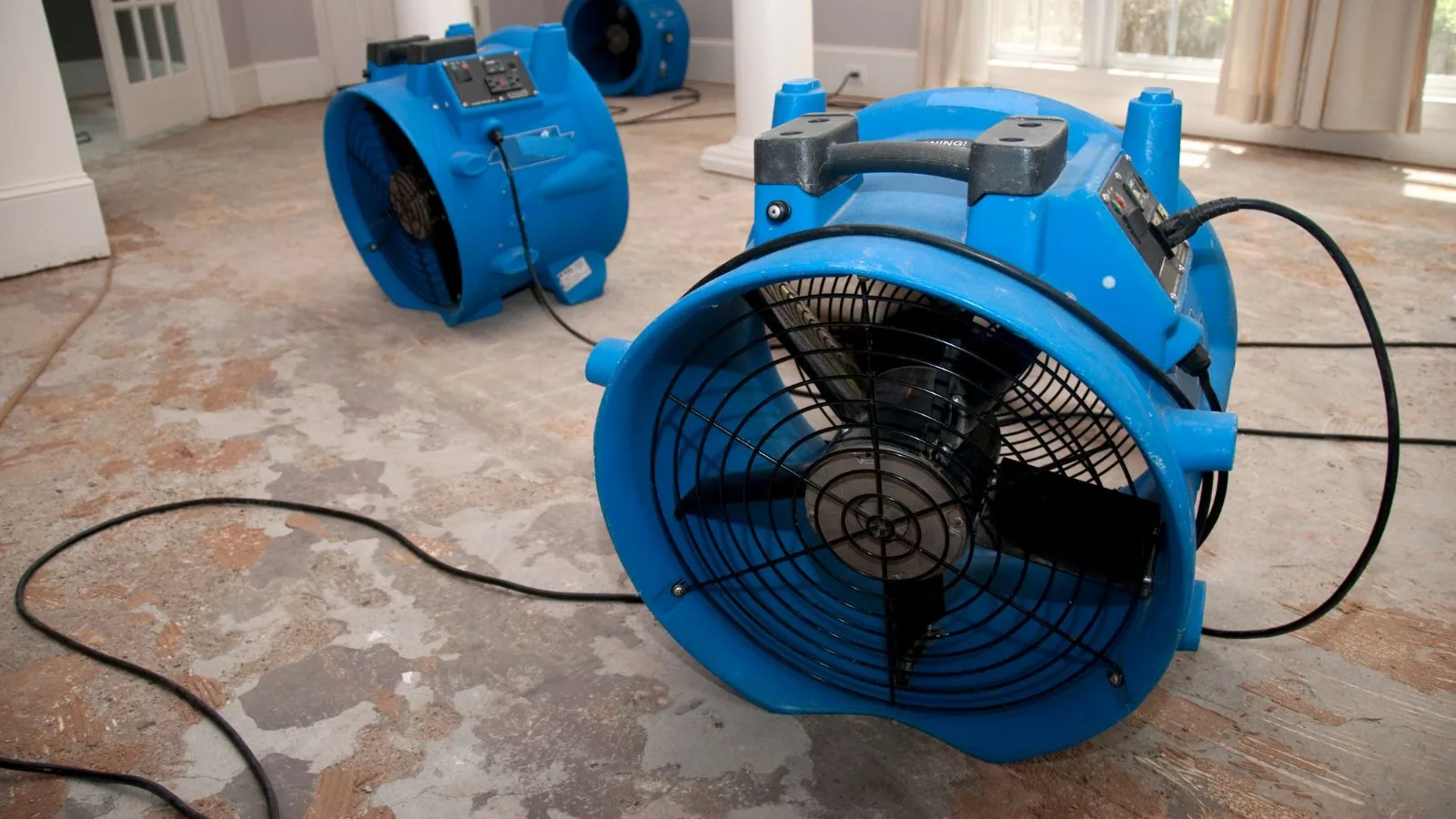
Wet carpet is a quick call: clean water caught within a day or two can often be dried, and contaminated or old water usually means replacement. Lift furniture off the carpet, put foil or blocks under legs and keep the room ventilated.
The carpet itself is rarely the problem. The pad beneath it holds water, and the subfloor below that decides whether the room dries cleanly.
Dry it or replace it
Category 1 water, which comes from a clean supply line, can often be dried in place if it is addressed quickly. Category 2 and 3 water, from appliance discharge, groundwater or sewage, usually means carpet and pad are removed.
The reasoning is practical. Pad cannot be cleaned well once it is contaminated, and wet pad left under carpet can feed mold. The categories come from ANSI/IICRC S500, the industry standard for water damage restoration.
Water category and the carpet call
The source decides most of the answer.
| Category | Source example | Carpet call |
|---|---|---|
| Category 1 | Supply line or heater leak | Dry in place if fast |
| Category 2 | Dishwasher or washer discharge | Often replace pad, check carpet |
| Category 3 | Sewage or floodwater | Remove carpet and pad |
| Any category, 48 hours or more | Delayed response | Often replace |
How drying carpet works
Crews extract water from the carpet and pad with specialized tools, lift the carpet if needed to dry the pad and subfloor, and use air movers and dehumidifiers. Readings in the subfloor show whether the room is dry.
A musty smell after drying means something stayed wet. Tell the crew, because mold growth is a possibility and the mold remediation page explains the next steps.
What to do before crews arrive
Remove small items and lift the furniture, keep foot traffic off the carpet and run the air conditioning if the weather is warm. Do not use a household vacuum on wet carpet.
Photograph the carpet, the source and any wet walls. If the water came from a leak, the appliance leak page and the burst pipe page describe where it likely started.
Why the pad and subfloor matter most
Carpet is the surface, and the pad underneath is a foam or fiber layer that holds far more water than the carpet fibers do. It also hides the subfloor, which is concrete, plywood or boards that must reach a dry reading before the floor is closed again.
A carpet that feels dry on top can still sit on a wet pad. Meters read through the layers and show whether the room is truly dry, which is why a crew measures before it decides to leave anything in place.
Carpet tack strips and baseboards can also hold water at the edges of a room. Crews check them as part of the same round of readings and lift baseboards where the wall base is wet.
Carpet soaked? Call the phone line.
☎ Call (833) 521-1033What moves the cost
Carpet jobs are priced by category, area and time.
- Water category. Clean, gray and contaminated water lead to different calls.
- Time wet. Longer exposure reduces what can be dried.
- Area. One room is smaller than the whole level.
- Pad and subfloor. Pad comes out more often than carpet.
- Rebuild scope. New pad, carpet and trim.
Insurance: Insurers often pay for sudden events and decline gradual ones, and flood damage is usually handled under separate coverage. Your policy wording and your insurer decide what applies to you. Call (833) 521-1033 and describe the damage. The scope and price are explained up front.
Nearby coverage
You can call about a house in Mount Juliet, Hermitage or Old Hickory and get the same answer process. For wood floors under the same leak, see the hardwood floor page.
Common Questions
Can wet carpet be saved?
Often, if the water was clean and it is dried within a day or two. Contaminated water or long exposure usually means replacement.
Do I have to replace the carpet pad?
Pad holds water and is hard to clean once contaminated, so it is replaced more often than the carpet itself.
Can I dry carpet with fans?
Fans alone leave moisture in the pad and subfloor. Measured drying with dehumidifiers works better and closes the job with readings.
Will insurance cover wet carpet?
Sudden and accidental water damage is often covered. Check your policy or ask your insurer, and photograph the carpet before it is removed.