
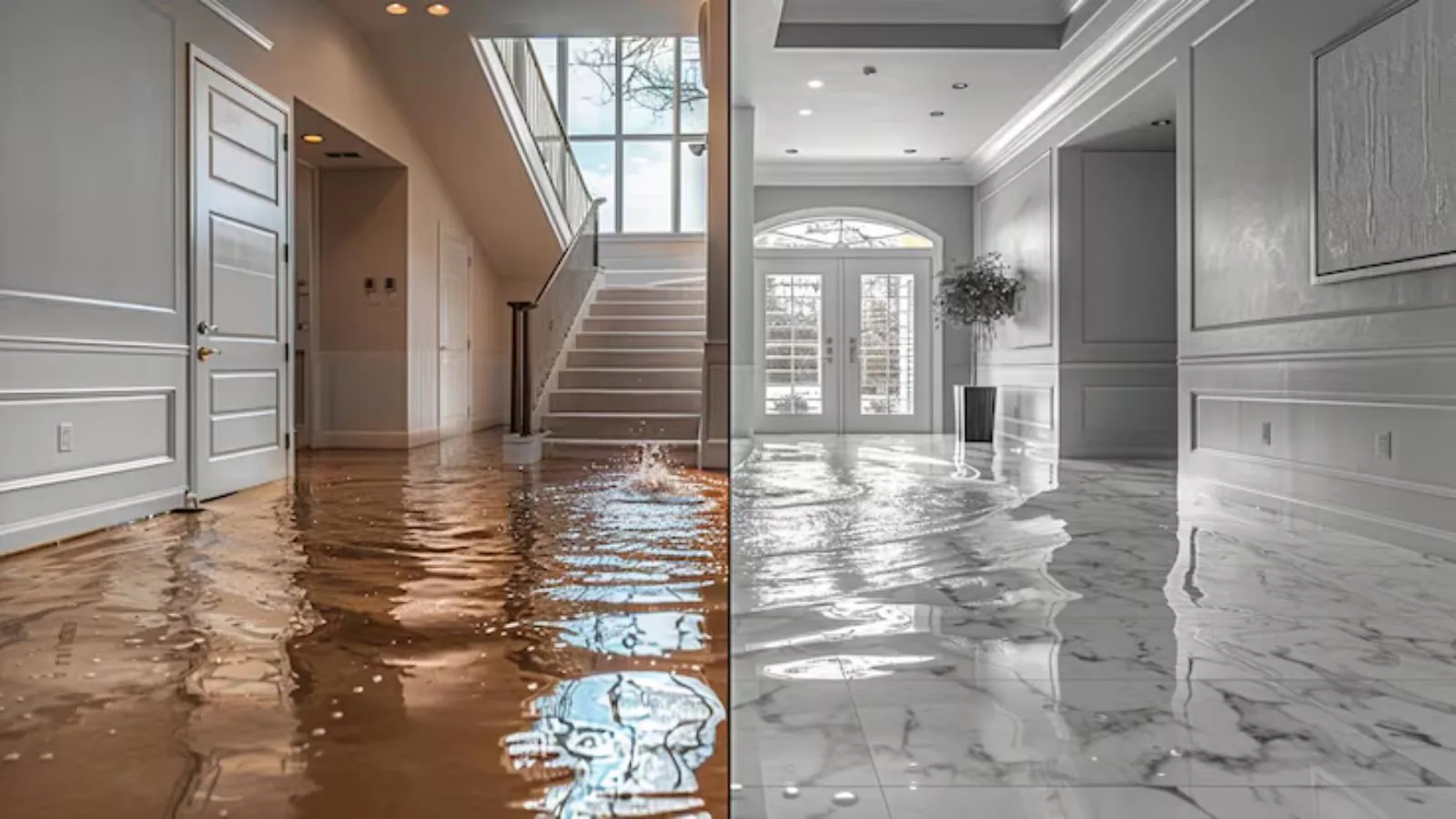
Rising water inside the house is an emergency, and the 24/7 line is open at any hour. While you wait, stay out of standing water that could touch outlets, panels or appliances, keep children and pets away and lift what you can above the waterline.
This page covers flooding that comes from outside the plumbing: creek overflow, groundwater and surface runoff. A failed pipe or appliance has its own page, such as burst pipe water damage, because the source decides the water category and the cleanup.
When floodwater is an emergency
Floodwater is treated as Category 3 water under ANSI/IICRC S500, the industry standard for water damage restoration. That means it is considered contaminated by whatever it crossed on the way in, including soil, runoff and sometimes sewage.
The practical result is that porous materials that soaked, such as carpet, pad and the lower part of drywall, usually come out instead of drying in place. Hard surfaces and framing can often be cleaned, sanitized and dried.
What recent Mount Juliet flooding shows
On July 21, 2026, Mt. Juliet police, firefighters and public works answered 15 flooding incidents in one evening after streams and creeks rose quickly in low-lying areas. The department reminded drivers never to enter a flooded roadway.
NWS Nashville's summary of the 2013 flash flood reports 5 to 7 inches of rain in northern Wilson County and dozens of Mount Juliet roads under several feet of water. Those events are regional reminders, not a map of your street, so check your own address on the city's FEMA flood zone web app or the FEMA Flood Map Service Center.
Water categories at a glance
The category decides what can be dried and what has to be removed, so it is the first thing assessed.
| Category | Typical source | What usually happens to materials |
|---|---|---|
| Category 1 | A broken supply line or an overflowing sink | Most materials dry in place, and speed matters most. |
| Category 2 | Washer or dishwasher discharge, or a sump overflow | Carpet pad and soft goods often come out, and surfaces are treated. |
| Category 3 | Floodwater from a creek or surface runoff, and sewage | Porous materials are removed, structure is cleaned, sanitized and dried. |
How the work runs
Crews start with extraction, using submersible pumps and truck-mounted units to take standing water out. Then contaminated porous materials are removed, the structure is cleaned and treated, and air movers and LGR dehumidifiers dry what is left.
Moisture meters and thermal imaging track the drying with daily readings, and the work ends when readings reach the target, not on a set date. If the water was in a below-grade room, the basement water damage page covers that case, and sewage involvement is covered under sewage backup cleanup.
Flood coverage is a separate policy
The Tennessee Department of Commerce and Insurance says most homeowners and renters policies do not cover flood damage to the structure or contents, and that only a flood insurance policy will. It also notes that National Flood Insurance Program policies usually have a 30-day waiting period before they take effect.
So the question to ask your insurer is what kind of water it was and which policy applies. Photograph the waterline before anything is moved, and keep records of what was wet.
Water at the door or already inside? Call the line and describe how high it is.
☎ Call (833) 521-1033What moves the cost
Flood jobs vary more than most because the water is contaminated. These are the factors that set the scope.
- Water category. Floodwater is Category 3, which raises the amount of material that is removed and sanitized.
- Area affected. Square footage and the number of rooms the water reached.
- Materials involved. Carpet, pad, drywall height, cabinets and insulation each have their own call.
- Drying days and equipment. Air movers and dehumidifiers run until readings reach the drying target.
- Rebuild scope. Drywall, flooring, trim and paint after the structure is dry, covered under wall and drywall repair.
Insurance: Sudden and accidental water damage is often covered, while gradual leaks and neglect often are not, and flood damage usually needs separate flood coverage. Check your policy or ask your insurer. For a figure that fits your own loss, call (833) 521-1033 and the scope and price are explained before work starts.
Where the crews work
Flood response covers Mount Juliet and nearby places such as Hermitage, which sits beside the Stones River and Percy Priest Lake, and Old Hickory, on the Cumberland River. Callers from Lebanon, Nashville and Gladeville ask whether crews reach them, so give your address on the call.
Common Questions
Do you handle flood damage emergencies at night or on weekends in Mount Juliet?
Yes. The line is open 24/7, every day, because flooding does not follow business hours. Call, describe how high the water is and what it reached, and the next steps are explained on the call.
How is floodwater different from water from a burst pipe?
A burst supply line is usually clean water when it starts, while floodwater picks up soil, runoff and sometimes sewage on the way in. That difference changes how much material comes out and how it is cleaned.
Does homeowners insurance pay for flood damage?
Usually not. The Tennessee Department of Commerce and Insurance says only a flood insurance policy covers flood damage, so check your policy or ask your insurer what applies to your loss.
How do I check whether my address is in a mapped flood area?
Use the FEMA Flood Map Service Center address search or the flood zone web app on the City of Mt. Juliet flood plain information page. A map zone describes mapped risk, not whether your house will flood.
Do you pump out yards and pools?
No. Exterior yard and pool pumping is a different service. This work starts at the building, with water inside it and the drying and repair that follow.