
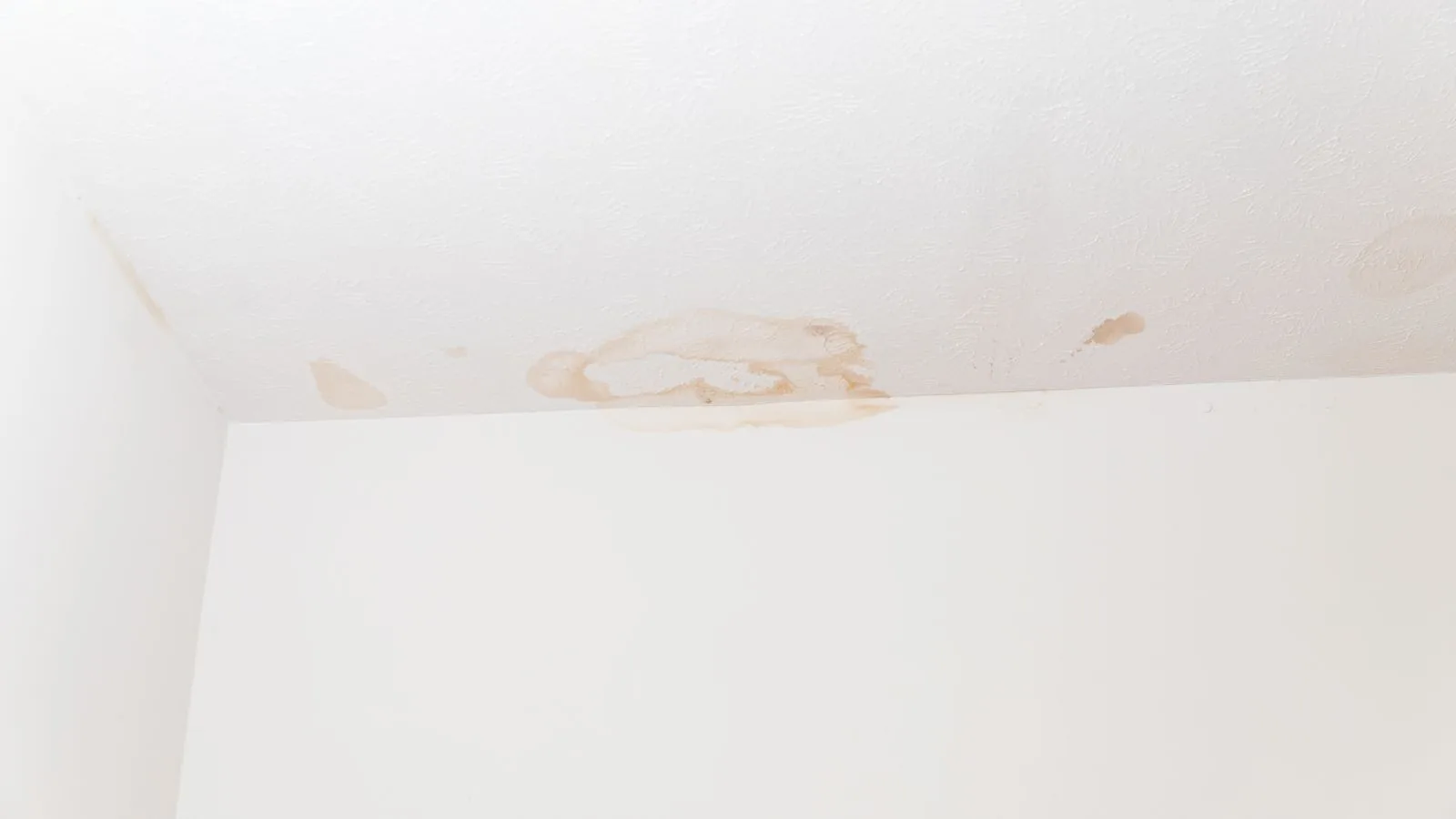
A ceiling that drips, bulges or sags is an emergency, and the 24/7 line is open now. Keep people out from under a sagging section, move furniture aside, and if it is safe, poke a small hole at the low point of a bulge so water drains into a bucket rather than collapsing the drywall. Turn off power to a room with water falling through a light fixture.
A wet ceiling is a symptom. The cause is above it: a roof, a bathroom, an AC unit or a supply line. Restoration dries and repairs the ceiling, and the source above it has to be found and stopped too.
What a stain on the ceiling is telling you
A brown ring with a darker edge usually means water has come through more than once. A fresh gray patch that spreads means active water. A bulge means the drywall is holding a pocket of water that can fall in one piece.
Insulation above the drywall holds water like a sponge. It keeps the ceiling wet long after the source stops, which is why drying has to include the cavity above and not only the visible stain.
Where ceiling water comes from
The room above and the weather outside point to the source.
| Source | Typical clue | Who fixes the source |
|---|---|---|
| Roof leak | Stain after rain, near an outside wall | Roofer |
| Bathroom above | Stain under a tub, toilet or shower | Plumber |
| AC unit in the attic | Stain in summer, no rain | HVAC technician |
| Supply or drain line | Constant drip, rising bill | Plumber |
Roof leaks and ceiling damage
A roof leak is the most common cause after a heavy storm. Water enters through missing shingles, damaged flashing around a chimney or vent, or a failed seal at a skylight, then runs along the underside of the roof deck and drops where it finds a gap. That is why the stain often sits several feet from the actual opening.
Wind-driven rain, hail and fallen limbs open the roof in ways that cannot be seen from the ground. After the March 3, 2020 tornado, NWS Nashville documented widespread roof and structural damage across Mount Juliet, which shows how quickly an opening can turn into interior water damage.
A roofer closes the opening, and a temporary tarp is the usual first step when more rain is coming. Restoration handles the wet insulation, the drywall and the repair of the ceiling after the roof is sealed. The storm side of that work is on the storm water damage page.
How the work runs
Crews check the ceiling and the cavity above it with moisture meters and thermal imaging. Wet insulation is removed, bulging or stained drywall is cut out and the area is dried with air movers and dehumidifiers. Once readings reach the target, the drywall is patched, textured and painted.
A ceiling stain that was only painted over will return when moisture moves through it again, so the drying readings matter more than the paint. The wall version of the same work is explained on the wall and drywall page.
Ceiling dripping or sagging? Call the line and describe it.
☎ Call (833) 521-1033What moves the cost
Ceiling repair is priced by how much was wet above it.
- Area affected. One stain is smaller than a ceiling wet across several rooms.
- Insulation. Wet insulation has to come out and be replaced.
- Ceiling type. Smooth, textured and popcorn finishes are repaired differently.
- Drying days. Equipment runs until readings reach the target.
- Rebuild scope. Drywall, texture and paint after drying.
Insurance: Price is one question and coverage is another. Many policies cover sudden, accidental water damage and leave out gradual leaks, with flood handled by its own policy. Check with your insurer. Call (833) 521-1033 to apply these factors to your house. Scope and price are explained before work starts.
Nearby coverage
If you live in Mount Juliet, Hermitage or Old Hickory, the first call is the same. A ceiling stained by an AC unit is covered on the AC leak page, and one under a bathroom may involve burst pipe water damage.
Common Questions
Do you handle ceiling water damage emergencies at night or on weekends in Mount Juliet?
Yes. The phone line is open 24/7. Call when a ceiling is dripping or sagging, describe the stain and what is above it, and the next steps are explained on the call.
Should I poke a hole in a bulging ceiling?
A small hole at the low point of the bulge can let trapped water drain safely instead of letting the drywall fall. Stand to the side, keep a bucket under it and keep out of the room if you smell gas or see wiring.
Do you fix the roof?
No. A roofer closes the opening. Restoration dries the insulation and repairs the ceiling after the source is stopped.
Will insurance cover a ceiling leak?
Sudden storm damage is often covered, while long-term leaks from poor maintenance often are not. Check your policy or ask your insurer.