
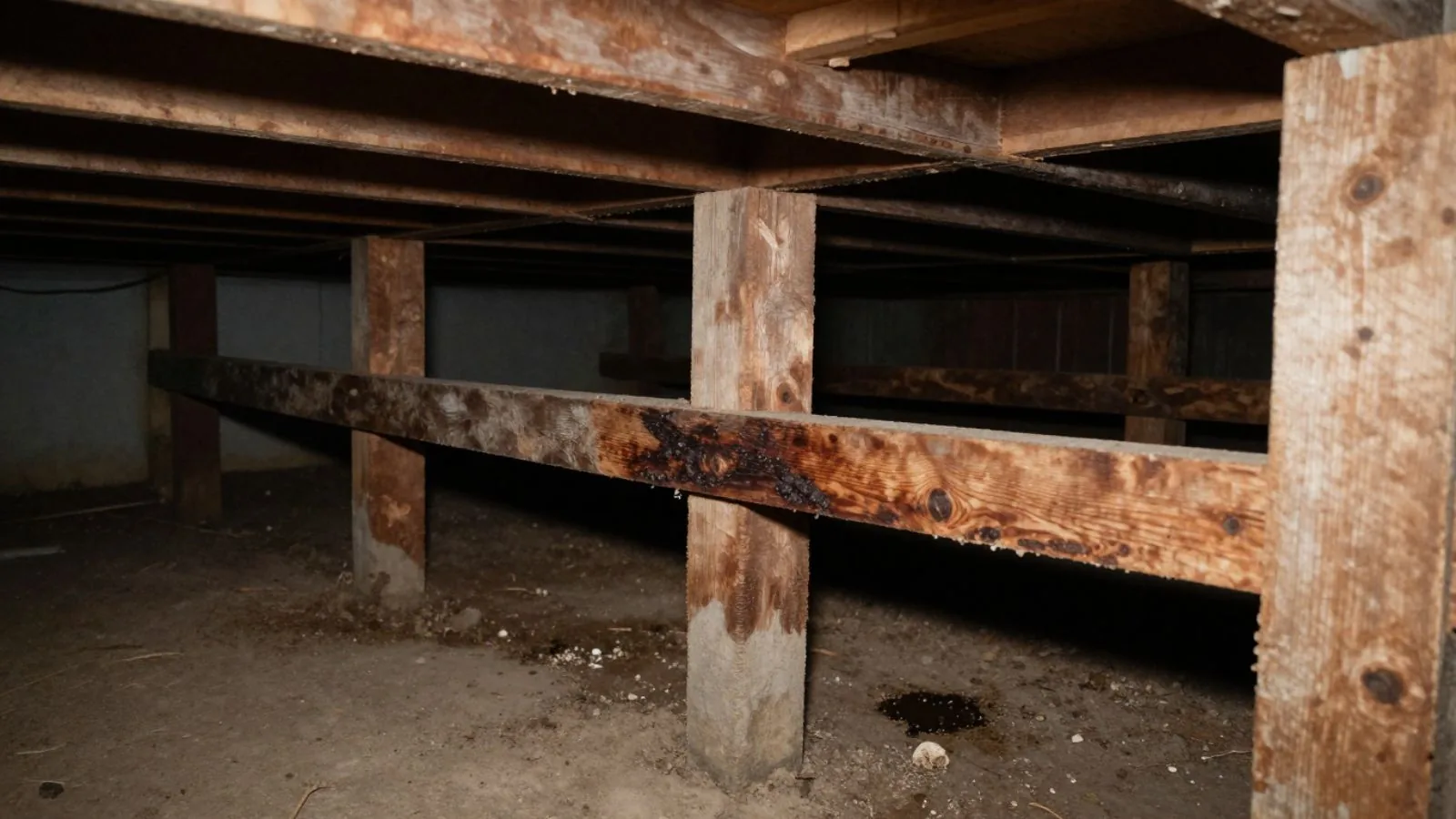
Water in a crawl space is easy to miss because nobody looks there. Signs from inside include a musty smell, floors that feel soft or cold, cupping hardwood and a higher humidity indoors. Do not enter a crawl space with standing water if wiring or ducts are low, and call for help.
A wet crawl space affects the structure above it: floor joists, the subfloor and the insulation between them. The work removes the water, dries what can be dried and replaces what cannot.
How water gets under a house
Rain runoff, a plumbing leak, a failed condensate line and groundwater that rises after storms are the usual routes. A supply line leak in the crawl space can run for months because the space is out of sight.
Houses in the Mount Juliet area are built on different foundations, so a crawl space is common in some neighborhoods and not in others. Check your foundation type from your home documents before you assume it applies.
Crawl space damage and what is done
Materials in the crawl space react differently to water.
| Material | After water | Usual call |
|---|---|---|
| Fiberglass batt insulation | Holds water, falls away | Removed and replaced |
| Floor joists and subfloor | Can dry if caught early | Dried and tested |
| Duct work | May collect water or condensation | Inspected and cleaned |
| Vapor barrier | Can trap moisture | Checked and repaired |
How the work runs
Crews pump out standing water, remove wet insulation, then measure moisture in the joists and subfloor. Air movers and dehumidifiers dry the space and the floor system above it.
Hardwood floors above a wet crawl space often cup, so the hardwood floor page explains how wood is judged. If the moisture has been there a long time, the mold remediation page covers what happens when growth is found.
Fixing the cause
A plumber fixes a leaking line, and a contractor handles grading, vapor barriers and encapsulation. Restoration does not do those jobs, and a crawl space that is dried but still takes water will become wet again.
Photograph the crawl space and keep the plumber's report. Sudden and accidental water damage is often covered, and long-term seepage often is not, so check your policy or ask your insurer.
Signs you can check from inside the house
Cold floors in winter, a persistent musty smell near floor vents and baseboards that pull away from the wall can all trace back to moisture under the house. A higher reading on a household hygrometer than the rest of the house is another clue.
Do not tape over vents or run fans in the crawl space on your own. Moving humid air through the space can spread moisture to dry areas, and a crew sets airflow based on readings.
Crawl space wet? Call the phone line and describe it.
☎ Call (833) 521-1033What moves the cost
Crawl space jobs are priced by water, access and materials.
- Standing water. Depth and time decide how much needs pumping.
- Access. Tight spaces take longer to work in.
- Insulation and materials. Wet insulation is removed and replaced.
- Drying days. Joists and subfloor dry slowly.
- Rebuild scope. Insulation, flooring and repairs above.
Insurance: Many homeowners policies respond to a sudden burst or failure and not to slow seepage, and flood water usually requires a flood policy. Read your policy or ask your insurer which applies. Call (833) 521-1033 and describe what is wet. The scope and price are explained before work starts.
Nearby coverage
Beyond Mount Juliet, the line takes calls from Hermitage and Old Hickory. A line leak under a slab house is described under slab leak water damage.
Common Questions
How do I know my crawl space is wet?
A musty smell, cold or soft floors, cupping hardwood and high indoor humidity are common signs. Looking in the crawl space confirms it, but do not enter if there is standing water near wiring.
Do you encapsulate crawl spaces?
No. Encapsulation and drainage are separate trades. Restoration removes water, dries the structure and repairs damage.
Can a wet crawl space cause mold?
It can, because mold needs moisture and crawl spaces are dark and humid. The source has to be stopped and the space dried before any other work.
Will insurance cover crawl space water damage?
Sudden and accidental damage is often covered and long-term seepage often is not. Check your policy or ask your insurer.