
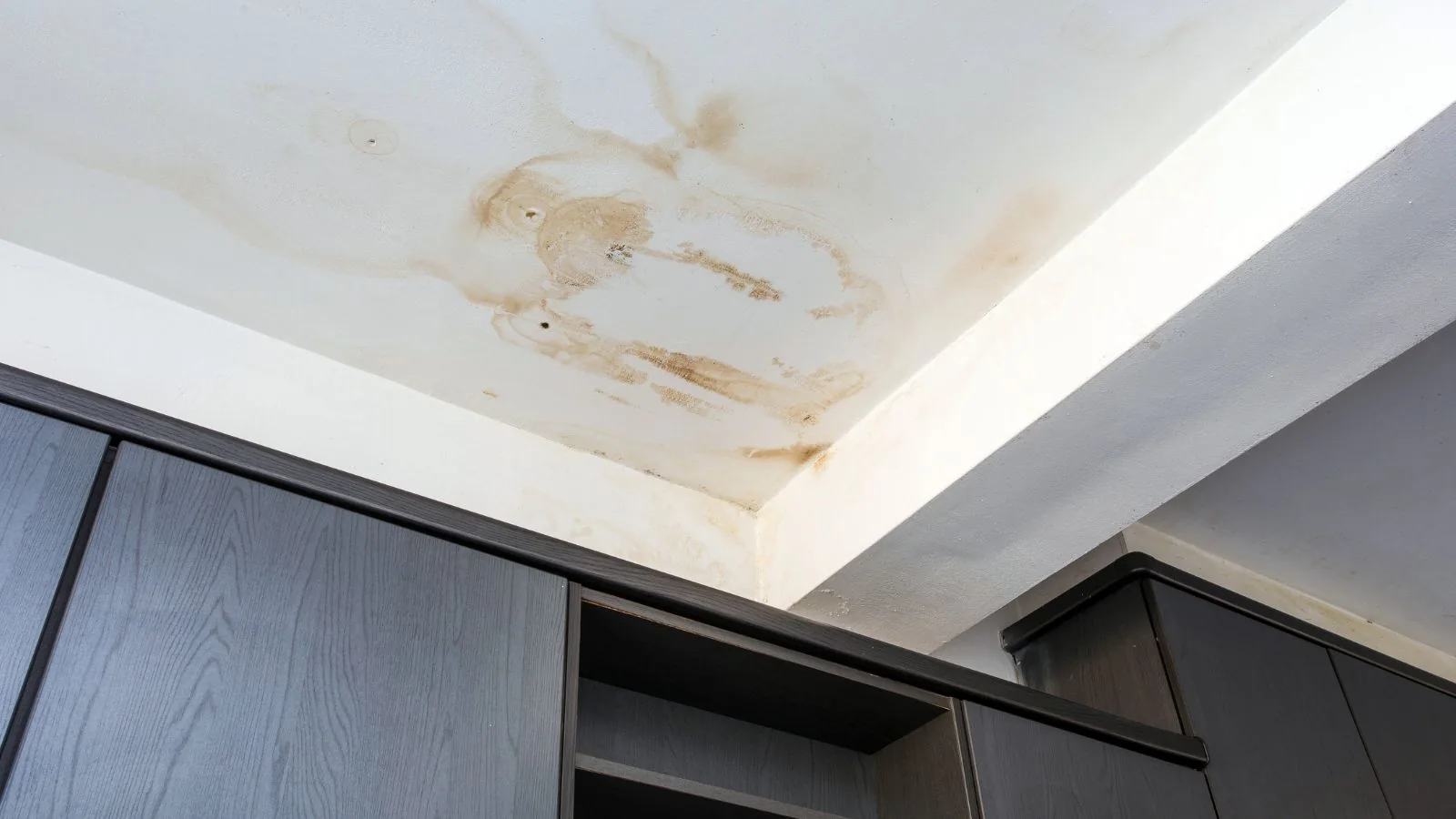
Kitchen water damage is the room-level view of a loss: the sink cabinet, the toe kicks, the floor and the wall behind them. The cause might be a supply line, a drain connection or a dishwasher, and the repair choices depend on what the cabinets are made of.
If water is still running, close the shutoff under the sink or the main. For the dishwasher or refrigerator itself, see appliance leak water damage, which covers the failed machine.
What water does in a kitchen
Water from an under-sink leak pools inside the cabinet, then wicks into the toe kick and under the floor covering. Particleboard and MDF cabinet bases swell and do not return to size, while solid wood and plywood bases tolerate water better.
That difference matters for the repair. A swollen cabinet base often has to be replaced, while a wet base of plywood may dry.
Kitchen materials and how they react
The material decides whether it dries or gets replaced.
| Material | After water | Usual call |
|---|---|---|
| Particleboard or MDF cabinet base | Swells, loses strength | Often replaced |
| Plywood cabinet base | May dry if caught early | Dried and checked |
| Vinyl or tile floor | Water can sit beneath | Dry the subfloor |
| Wood or laminate floor | Cups or swells | See hardwood floor repair |
Water under the sink
A leak under a sink often goes unseen because the cabinet hides it. Signs include a musty smell, a soft cabinet floor, stains on the door frames and lifted edges of the flooring near the cabinet.
If a sink leak ran for a while, mold can follow. The mold remediation page explains when growth is found and how it is handled after the moisture source is stopped.
How the work runs
Crews extract water, remove the cabinet toe kicks and bases only as needed and use moisture meters and thermal imaging to find water in the subfloor and wall base. Air movers and dehumidifiers dry the area, sometimes with small drying panels under cabinets.
Countertops and upper cabinets usually stay, and the rebuild focuses on the base, the floor and the wall. The wall portion is covered on the wall and drywall page.
What to do before crews arrive
Empty the sink cabinet and set a bucket or towels under the leak only after the supply is closed. Move small appliances, cleaning products and pantry items off the wet floor, and lift rugs so the flooring beneath can breathe.
Do not run a household fan or heater over a wet floor in the hope of drying it quickly. Warm air without dehumidification pushes moisture into cabinets and walls, and measured drying works better.
Records for your insurer
Photograph the cabinet interior, the floor and the supply line before you clean anything. Keep the failed part if possible. Sudden and accidental damage is often covered, while long-term seepage often is not, so check your policy or ask your insurer.
Kitchen wet? Call the phone line and describe the cabinet and floor.
☎ Call (833) 521-1033What moves the cost
Kitchen jobs are priced by cabinets and flooring.
- Cabinet material. Particleboard bases are usually replaced and plywood ones may dry.
- Flooring type. Vinyl, tile, hardwood and laminate each dry differently.
- Area affected. A single sink base is smaller than a floor wet across the whole kitchen.
- Drying days. Equipment runs until readings reach the target.
- Rebuild scope. Cabinet bases, floor and wall finishes after drying.
Insurance: Do not assume the bill and the claim are the same thing. A sudden failure may be covered, a slow leak may not be, and rising water usually needs a flood policy. Ask your insurer what your policy pays. Phone (833) 521-1033 to describe your loss, and the scope and price are explained before any work.
Nearby coverage
Work reaches past the city limits too, into Hermitage and Old Hickory. A kitchen leak that traveled to the ceiling below is covered under burst pipe water damage when a supply line failed.
Common Questions
Can swollen cabinets be saved?
Plywood bases sometimes recover after drying, while particleboard and MDF bases that swelled usually have to be replaced. Moisture readings and inspection decide.
Do you replace countertops?
Countertops are usually not harmed by an under-sink leak and stay in place. The work focuses on cabinet bases, flooring and the wall behind them.
Will insurance cover a kitchen leak?
Sudden and accidental damage is often covered, and long-term seepage often is not. Check your policy or ask your insurer.
What if there is mold under my sink?
Stop the leak first, because mold needs moisture. The mold page explains what remediation involves once growth is found.