
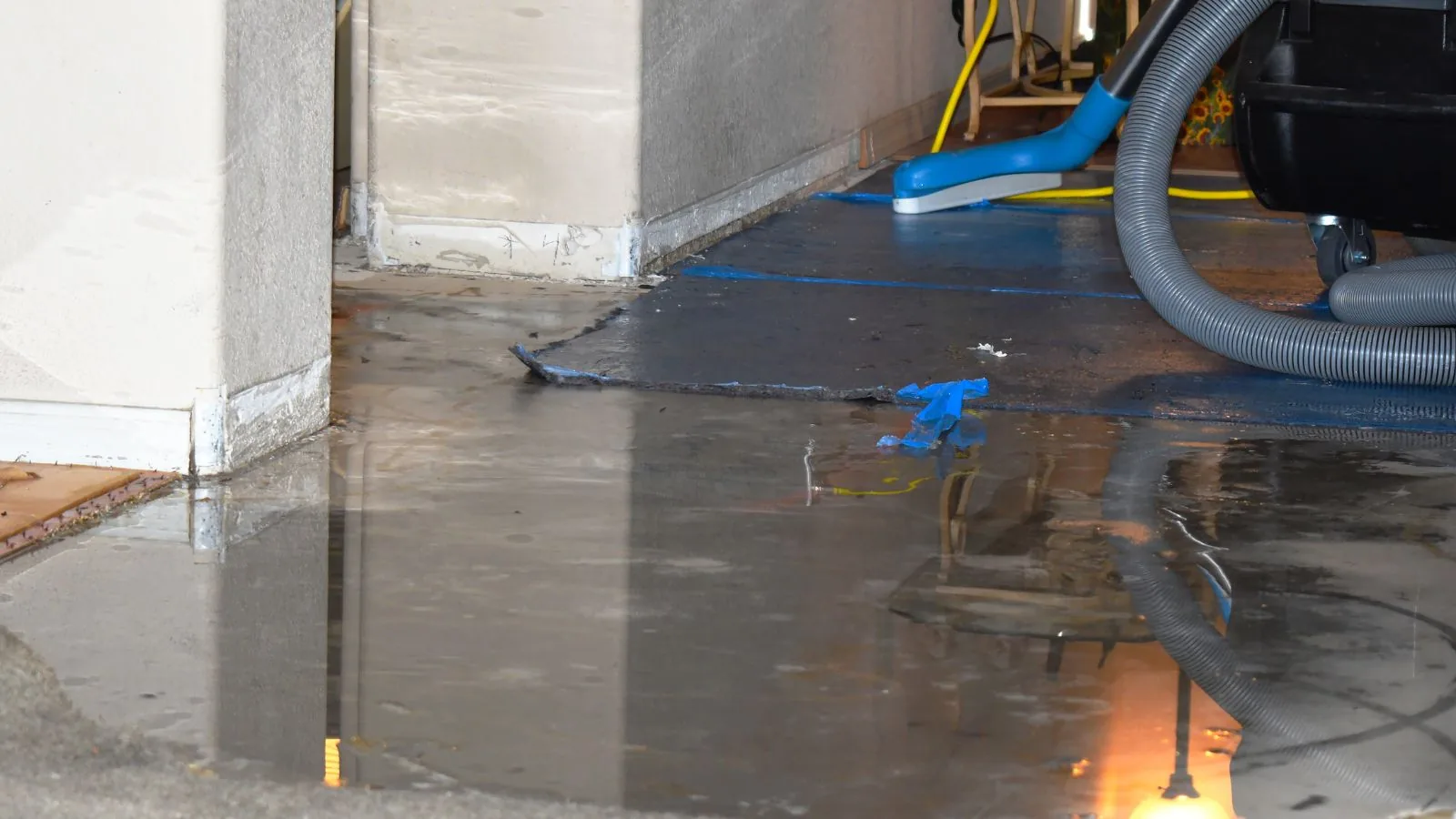
Standing water is an emergency because it keeps soaking downward, and the 24/7 line is open now. If you can do it safely, stop the source, keep people and pets out of the water and lift furniture legs off wet carpet with foil or plastic blocks.
Water extraction is the first job in any wet loss. It is the work of taking bulk water out of the structure with pumps and extractors, and it comes before drying because equipment cannot dry a floor that is still under an inch of water.
When standing water is an emergency
Water finds the easiest path, so a puddle on one floor is often a soaked subfloor and a wet wall cavity below. The longer it stays, the deeper it spreads into pad, plywood and drywall wicking upward from the baseboard.
The EPA's guidance on wet building materials uses a 24 to 48 hour window for drying before mold growth becomes likely, which is why extraction is not a job to leave for the weekend.
Equipment and method
Submersible pumps clear deep water first. Truck-mounted extraction units and portable extractors then pull water out of carpet, pad and hard floors, and wand tools reach into corners and under cabinet toe kicks.
On finished floors, crews check whether water has moved under the surface with moisture meters and thermal imaging. A floor that looks dry on top can still hold water in the subfloor, which is why extraction is followed by structural drying and dehumidification.
Until help is on site
These steps reduce damage without putting you at risk.
Stop the source
Close the fixture valve or the main water valve if it is dry and easy to reach.
Power first
Do not walk through water near outlets or a panel. If it is unsafe, call the utility or 911 before the restoration line.
Lift what you can
Move rugs, shoes, books and electronics up. Foil or plastic under furniture legs stops stains.
Photograph it
Take photos and video of the water and the damage before anything is moved.
Extraction by situation
The right method depends on what the water is standing on and how deep it is.
| Situation | Typical method | What follows |
|---|---|---|
| Inches of water on a finished floor | Submersible pump, then extractor | Moisture mapping and drying |
| Soaked carpet and pad | Truck-mounted extraction, pad lifted if needed | Dry the subfloor, replace pad if required, see carpet water damage |
| Water under hardwood or laminate | Extraction ports or board removal, then low-moisture drying | Dry in place or replace, see hardwood floor repair |
| Contaminated water | Pump, remove porous materials, sanitize | Handled as sewage backup cleanup or flood damage |
What extraction costs and what it does not cover
Extraction alone does not finish a loss. It stops further soaking and makes drying possible, so most jobs continue into drying and repair. Callers sometimes ask only for water to be pumped out, and that is possible when the structure is not wet beyond the surface, which the moisture readings show.
Yard and pool pumping, sump pump replacement and drying equipment rental are separate services that are not provided here.
Water on the floor right now? Call the line and say how deep it is.
☎ Call (833) 521-1033What moves the cost
Extraction is usually priced inside the larger scope. These factors set it.
- Water category. Clean, gray and black water are treated differently, and the category changes the method.
- Depth and area. Inches of water across many rooms take more equipment time than a single room.
- Materials involved. Pad, carpet and engineered flooring each need their own approach.
- Drying days. Equipment stays until readings reach the target.
- Rebuild scope. Whether anything has to be replaced after drying.
Insurance: Whether a policy pays depends on the cause. A sudden failure is often covered, a slow seep often is not, and rising water usually needs its own flood policy. Your insurer can say what applies. Call (833) 521-1033 to talk through your loss, and expect the scope and price before any work begins.
Local coverage
Crews work across Mount Juliet, including the Providence and Beckwith Road areas, and nearby in Hermitage and Old Hickory. For a pipe that already failed, burst pipe water damage explains the source side of the same job.
Common Questions
Do you handle water extraction emergencies at night or on weekends in Mount Juliet?
Yes. The phone line is open 24/7. Water extraction is the most time-sensitive part of a loss, so call at any hour and describe where the water is and how deep.
How soon does water need to come out?
As soon as possible. The EPA's wet-materials guidance uses a 24 to 48 hour window before mold growth is likely, and deeper soaking makes the repair larger the longer water sits.
Can you only extract the water and leave?
Sometimes. If moisture readings show the structure is dry beyond the surface, extraction may be enough. Readings, not appearance, decide that.
Do you rent out pumps or dehumidifiers?
No. Equipment is used on the job by the crew and is not rented out.