
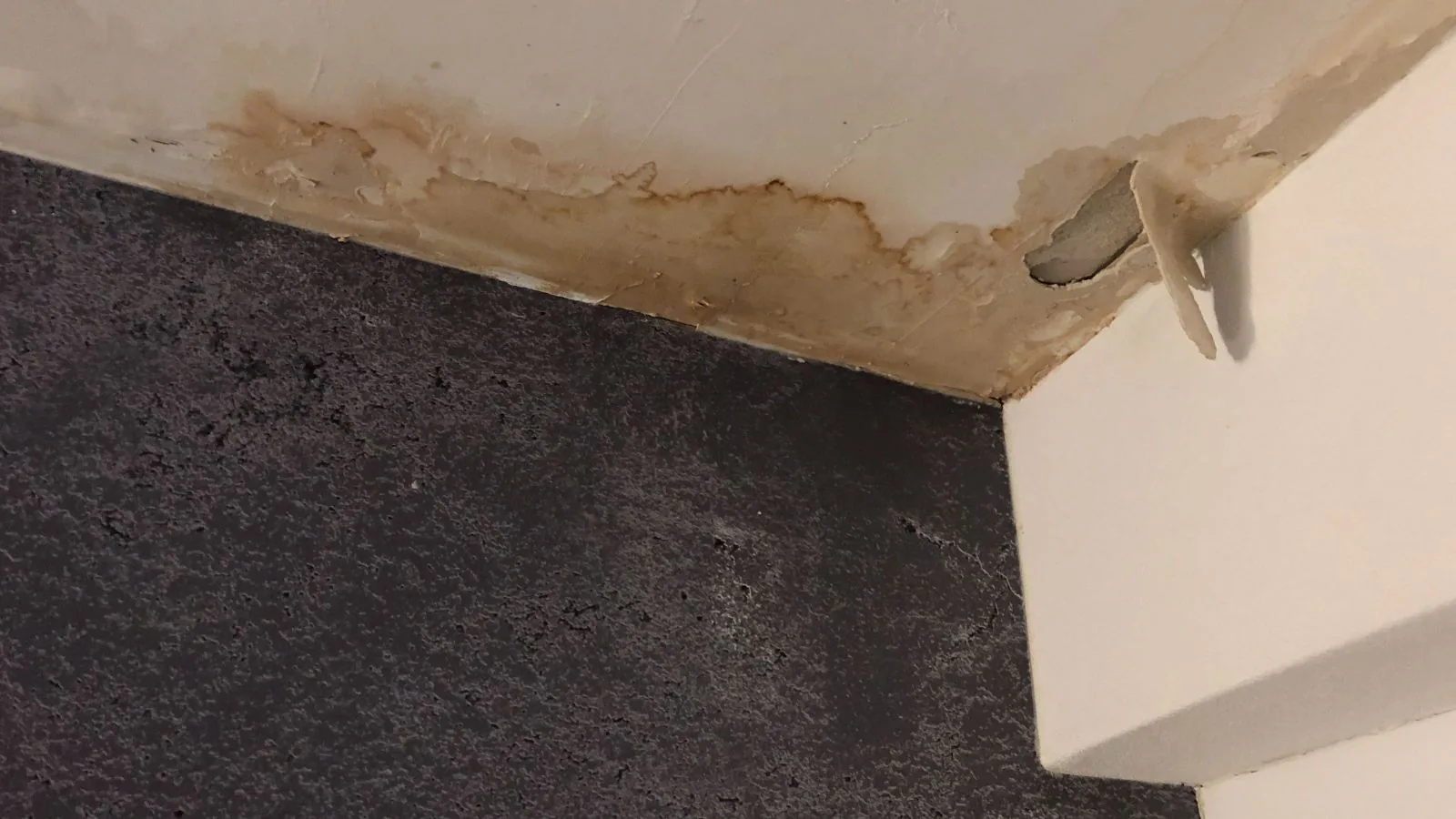
Hardwood takes on moisture from the bottom, so the first sign is often cupping, where the edges of each board rise higher than the center. Other signs are crowning, gaps between boards and buckling that lifts a section off the subfloor.
The question after a leak is whether the wood can be dried in place or has to come up. This page explains how that is decided, and it starts with stopping the water.
Why wood reacts so strongly
Wood absorbs and releases moisture with the humidity around it. When water reaches the underside, the bottom of each board swells faster than the top, and the edges curl upward. If the wood is dried slowly and evenly, many floors flatten again, and some need sanding afterward.
If the floor stayed wet for days, the swelling can be permanent, and the finish can fail. Finished floors laid over a wet subfloor can trap moisture, so drying has to reach the subfloor too.
Damage signs and what they suggest
Use these as a guide, not a verdict.
| Sign | What it suggests | Usual call |
|---|---|---|
| Light cupping, caught early | Moisture from below | Dry in place and recheck |
| Crowning after drying | Wood dried faster than it swelled | Sand and refinish if flat |
| Gaps between boards | Shrinkage after drying | Often normal, recheck |
| Buckling off the subfloor | Long exposure, adhesive failure | Usually replaced |
Dry in place or replace
Crews measure moisture in the boards and the subfloor and compare the readings with unaffected wood. Drying mats and low-air-flow methods pull water out through the floor, and readings are taken daily. Floors that reach the target and flatten are sanded and refinished, and those that do not are replaced.
Waiting a few weeks after drying before sanding is common, because the wood keeps moving. For the larger drying method, see the structural drying page.
Common sources in Mount Juliet homes
Hardwood often gets wet from a dishwasher or refrigerator line, a slab or crawl space leak, a plumbing line in an upstairs wall or a storm that opened the roof. The appliance leak page and the crawl space page describe two of the most common routes.
What not to do
Do not sand or seal a floor that still reads wet, because finish applied over moisture traps it and the boards can crown later. Do not point heaters or box fans at the floor to speed it up, since fast surface drying makes the edges shrink before the core is ready.
Do not pull up boards on your own unless a crew asks, because the layout of the floor and the subfloor readings help decide the plan. Photograph the floor first, including close views of the cupped edges.
Hardwood floors cupping? Call the phone line.
☎ Call (833) 521-1033What moves the cost
Hardwood cost depends on how much can be saved.
- Area affected. A single room is smaller than a floor across the house.
- Wood type. Solid boards and engineered planks react differently.
- Drying result. Floors that flatten can be sanded and refinished.
- Subfloor. A wet subfloor adds scope.
- Rebuild scope. Replacement boards, sanding and finish.
Insurance: Coverage usually follows the cause. Abrupt, accidental water is often covered, drawn-out leaks often are not, and a flood policy is its own product. Ask your insurer how your policy reads. Want help sizing your own loss? Call (833) 521-1033 and hear the scope and price before work starts.
Nearby coverage
Crews dispatch to Mount Juliet, and to Hermitage and Old Hickory when the address is within reach. Wet carpet is handled differently, and the carpet page explains why.
Common Questions
Can cupped hardwood be saved?
Often, if it is dried slowly and caught early. Moisture readings decide, and some floors need sanding afterward.
How long should I wait before sanding?
Readings should be stable at the target, and many floors rest for a few weeks first. The wood can keep moving after it looks dry.
Does restoration refinish floors?
Drying and repair planning are covered. Sanding and refinishing follow once the wood is stable, and the scope is explained before work starts.
Will insurance cover hardwood damage?
Sudden and accidental water damage is often covered, and long-term seepage often is not. Check your policy or ask your insurer.