
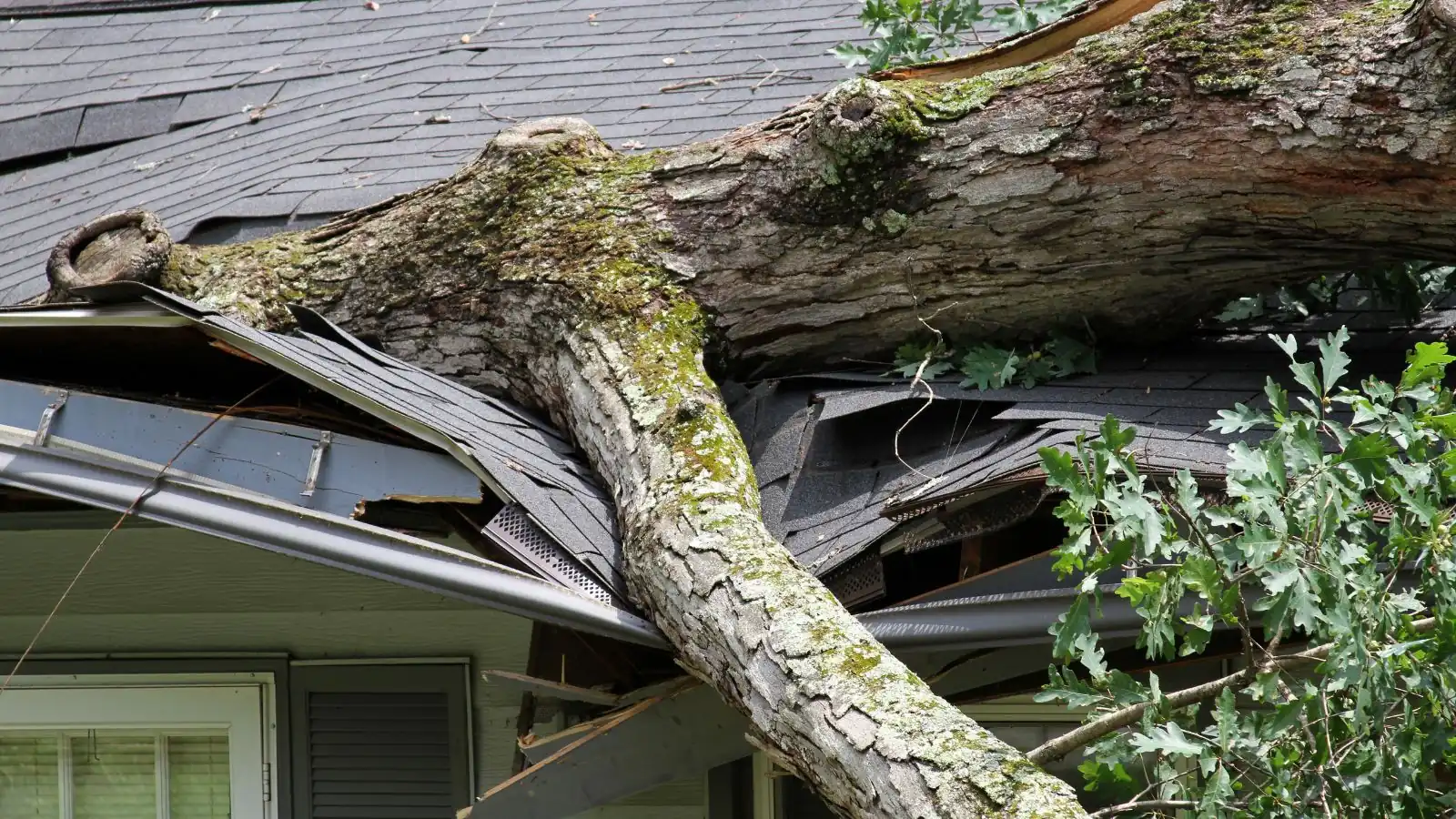
Storm water damage starts with an opening: missing shingles, a broken window, a fallen limb or a failed seal. The 24/7 line is open after any storm. Stay out of rooms with a sagging ceiling, keep away from downed lines and take photographs from a safe place before anything is moved.
This page covers rain that came in through the building envelope. Water that rose from the ground outside is flood damage, which is a different category with its own first steps.
Why storm losses move fast
A hole in a roof lets in as much water as the storm drops on it. Wet insulation, ceilings and walls follow, and the damage keeps growing until the opening is covered. A temporary tarp or board-up is the first job, and it belongs to the roofer or a board-up service.
Mount Juliet has real examples. NWS Nashville rated the March 3, 2020 tornado EF-3 and documented damage in the Chandler Road, Triple Crown Parkway, Catalpa and Clearview Drive areas of the city, and two schools were badly damaged.
Storm openings and the usual water path
Each opening leads water to a different place.
| Opening | Water path | Common damage |
|---|---|---|
| Missing shingles | Roof deck, insulation, ceiling | Ceiling stains and sagging |
| Broken window | Wall base, flooring, drapes | Flooring and trim |
| Fallen tree limb | Roof and attic, then ceilings | Insulation and drywall |
| Wind-driven rain at a door | Threshold, flooring | Floor and wall base |
How the work runs
Crews extract water, check moisture with meters and thermal imaging and remove wet insulation and drywall that cannot dry. Air movers and dehumidifiers bring the structure to the target, and repair begins once the roof or opening is sealed.
Rain that leaks into a ceiling is also covered on the ceiling water damage page, which explains stains, sags and wet insulation in detail.
Insurance after a storm
Wind and hail damage is usually part of a homeowners policy, while rising water is not. Photograph the opening, the wet rooms and any debris before you clean up, and call your insurer early. Keep receipts for tarps and emergency repairs.
The Tennessee Department of Commerce and Insurance advises keeping a log of calls and checking contractor licenses at verify.tn.gov. It also advises limiting deposits to no more than one-third of a home improvement contract price.
What to do while you wait for crews
Move furniture and valuables away from wet ceilings and walls, and set buckets under drips. Do not climb on a damaged roof, and keep away from sagging ceilings and anything touching a downed line.
If the power is on and water is near outlets or light fixtures, turn off the affected circuit at the panel only if the panel is dry and easy to reach. Otherwise call the utility. Take photographs of the opening from the ground and each wet room before you clean up.
Storm opened the house? Call the 24/7 line.
☎ Call (833) 521-1033What moves the cost
Storm cleanup is priced by the opening and what got wet.
- Size of the opening. A few shingles and a broken window let in different amounts.
- Time before sealing. More rain means more wet materials.
- Materials involved. Insulation, drywall, flooring and contents.
- Drying days. Equipment runs until readings reach the target.
- Rebuild scope. Ceiling, wall and floor repairs after drying.
Insurance: The cause drives coverage. Accidental and sudden losses are often paid, long-running leaks often are not, and flood damage typically sits under separate coverage. Your insurer can confirm what your policy says. Ring (833) 521-1033 to talk through the loss, and expect the scope and price before work begins.
Nearby coverage
Callers in Hermitage and Old Hickory, as well as Mount Juliet, reach the same 24/7 line. A storm that pushed water into a lower level also matters for basement water damage.
Common Questions
Do you handle storm water damage emergencies at night or on weekends in Mount Juliet?
Yes. The phone line is open 24/7. Call after a storm, describe the opening and what is wet, and the next steps are explained on the call.
Do you tarp the roof?
A roofer or board-up service closes the opening. Restoration handles water extraction, drying and repair of the interior once it is covered.
Is storm water damage the same as flood damage?
No. Storm damage is rain that came through the roof, windows or walls. Flood damage is water that rose from the ground, and it is usually covered by a separate flood policy.
Will insurance cover storm damage?
Wind and hail damage is often covered by homeowners policies. Check your policy or ask your insurer, and document everything before cleanup.