
Most homeowners policies cover water damage in some situations and exclude it in others. The difference is not how wet the house is. It is where the water came from and how fast it arrived. This guide explains the usual pattern so you know what to ask before you call your insurer.
None of this is a promise about your policy. Policies differ by company, endorsement and year, and only the policy language and your insurer can say what applies to your loss. Think of this page as a list of questions, not an answer.
Sudden and accidental versus gradual
The common dividing line in a standard policy is between sudden and accidental damage and damage that happens slowly. A supply line that bursts, a water heater tank that splits or a dishwasher hose that lets go is the sudden kind. A drip behind a wall that ran for months is the gradual kind.
Sudden and accidental water damage is often covered, and gradual leaks, seepage and neglect often are not. Insurers look for evidence of how long the water was there, which is why photographs, moisture readings and the failed part itself matter so much.
Common sources and how policies usually treat them
This is a general pattern, not a promise about any policy.
| Source of water | Often covered? | What to ask |
|---|---|---|
| Burst or split supply line | Often yes, if sudden | Does the policy pay to find and open the leak? |
| Appliance failure | Often yes, if sudden | Is the failed appliance itself excluded? |
| Rain through a storm-damaged roof | Often yes, if the roof was damaged first | Is wind or hail damage covered? |
| Slow leak over months | Often no | What counts as long-term seepage? |
| Rising water from outside | Usually no | Do I have a separate flood policy? |
| Sewer or drain backup | Often no without an endorsement | Is there a backup endorsement? |
Flood is its own policy
Rising water from outside, such as creek overflow or surface runoff, is usually excluded from a standard homeowners policy. A flood policy covers it, and the National Flood Insurance Program sells one through participating insurers. The City of Mt. Juliet Utility Department hosts the FEMA flood zone map, so you can see how your address is classified before you ask an agent about it.
Because of the waiting period, flood coverage has to be in place before the storm. If you are unsure whether you have it, ask your agent for the declarations page and read the line items yourself.
What insurers look at after a loss
An adjuster usually wants to know the source, the time the water started, the steps you took to limit the damage and the scope of the damage. Policies commonly expect the owner to protect the property from further harm once a loss happens, such as closing the water main and removing standing water. Reasonable emergency steps are usually reimbursable, so keep receipts.
Neglect is the other trap. After Winter Storm Fern in January 2026, the state insurance department noted that frozen pipe damage might not be covered if negligence is involved, such as leaving the heat off. The same logic applies to a leak you saw and ignored.
Steps to take right after water damage
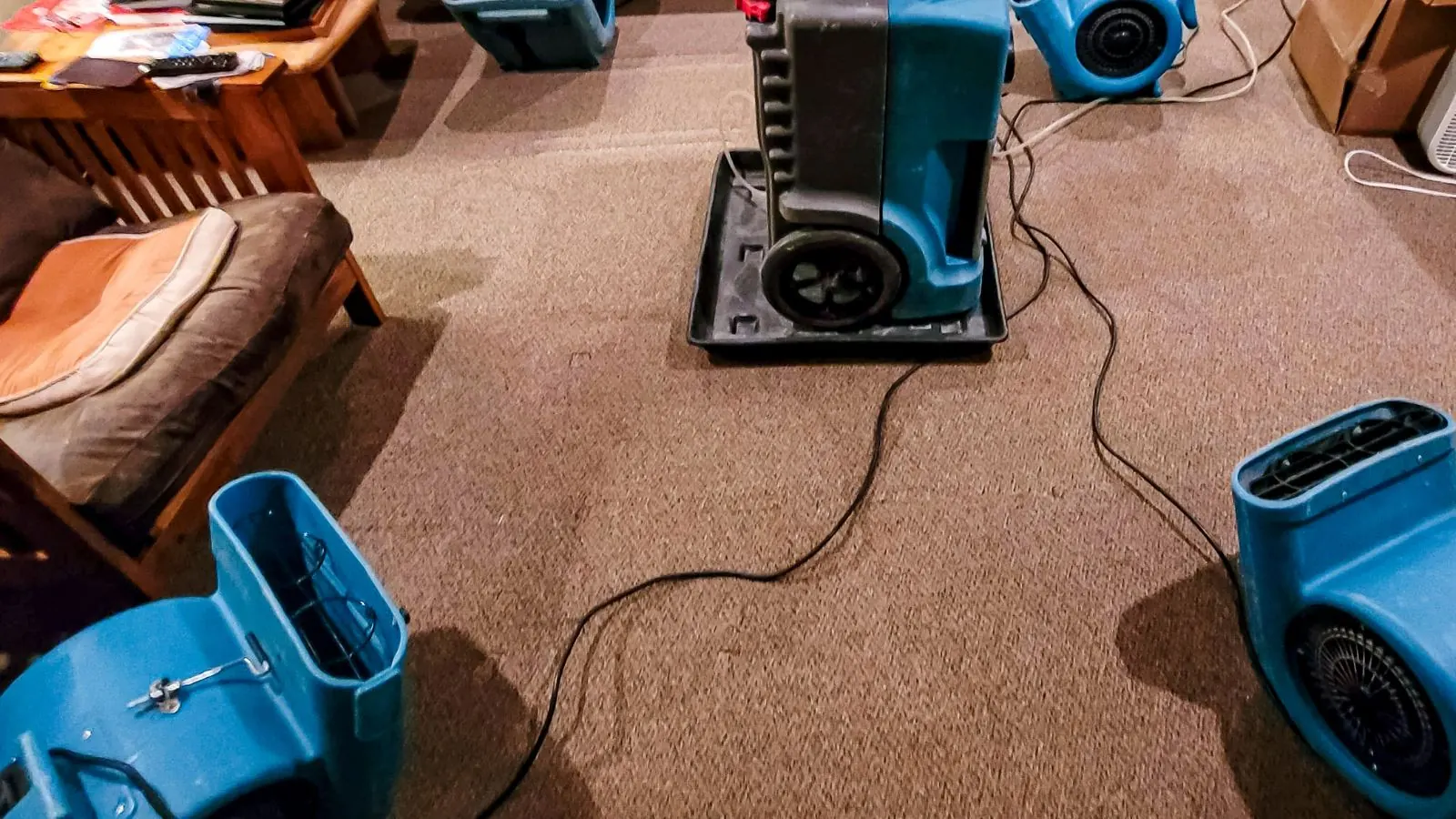
Stop the source, make the area safe and photograph everything before moving it. Then call your insurer and start a log of who you spoke to and when. If you need extraction and drying, a restoration crew can document the damage with photos, moisture readings and a written scope for the claim.
The water extraction page explains what the first hours look like, and the burst pipe page explains the most common sudden loss. Neither replaces a conversation with your insurer.
Water in the house right now? Call the line and describe what is wet.
☎ Call (833) 521-1033Questions worth asking your insurer
What is my deductible for water damage, and is it a flat amount or a percentage of the home's value? Does the policy exclude long-term seepage, and how does it define it? Is there a sewer or drain backup endorsement? Are mold and its testing covered after a covered water loss, and is there a limit? Does the policy pay for the cost of finding the source of a hidden leak?
Get the answers in writing if you can, and ask what the insurer needs from you, such as photographs, receipts and a scope of work.
Hermitage, Old Hickory and the rest of the area
Policies and agents vary by address, and Davidson County addresses follow different permit rules from Wilson County ones. Homes in Hermitage and Old Hickory are in Davidson County, and a claim there may involve Metro Nashville Codes when drywall is replaced. Your insurer and the local codes office can say what applies.
What Tennessee regulators say
The Tennessee Department of Commerce and Insurance has told consumers that homeowners and renters policies usually do not cover flood. Flood damage is covered by a separate flood policy, and a policy through the National Flood Insurance Program has a 30-day waiting period before it takes effect.
That timing matters in a city where creeks rise fast. On July 21, 2026, Mt. Juliet police, firefighters and public works answered 15 flooding incidents in one evening. A flood policy bought after the rain starts does not help that storm. Source type: state insurance regulator consumer guidance and city public safety reports.
Common Questions
Does my Mount Juliet homeowners policy cover a creek that overflows into the yard and then the house?
Usually not. Rising water from outside is generally excluded from a standard homeowners policy and covered by a flood policy. Ask your agent about flood coverage before the next storm, because new National Flood Insurance Program policies carry a 30-day waiting period.