
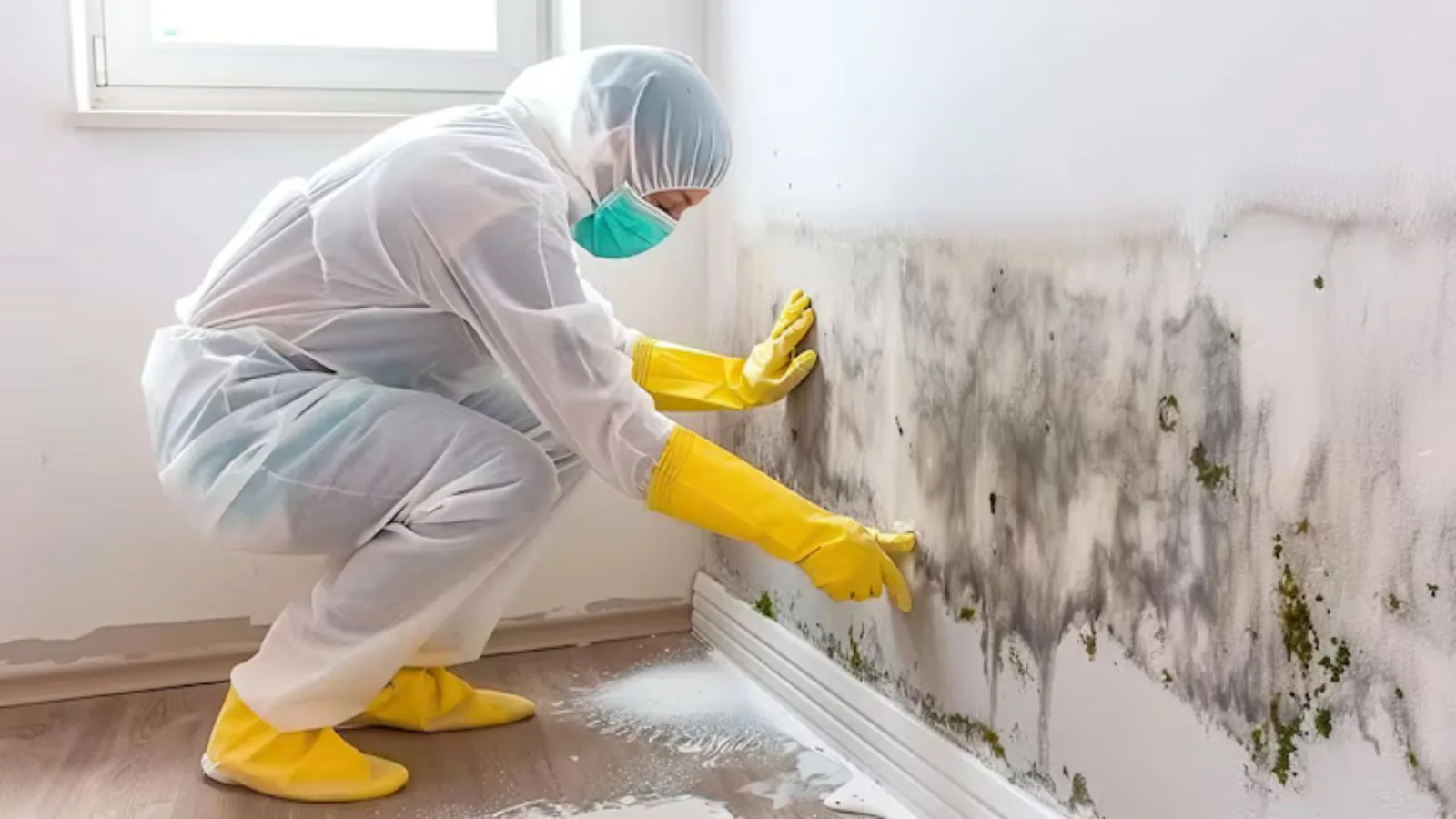
There is no single number of days. Mold growth depends on moisture, temperature, the material and the type of mold. What the EPA gives is a window for prevention: dry water-damaged areas and items within 24 to 48 hours to prevent mold growth. The EPA adds that when materials are dried in that window, in most cases mold will not grow.
That is the useful answer. The clock that matters is not when mold appears but how long materials stay wet.
What speeds mold up and what slows it down
Mold needs moisture, a food source and a suitable temperature. Wet drywall, wood, carpet and paper are food. Warm, still, humid conditions favor growth, and dry, moving air slows it. A wall cavity with wet insulation and no airflow is close to ideal for mold.
Clean water dries differently from dirty water, and dense materials dry more slowly than thin ones. That is why a wet sheet of drywall is a bigger risk than a wet tile.
A rough timeline for planning
The EPA gives the drying window. The rest is general guidance.
| Time since the water | What it means | What to do |
|---|---|---|
| First day | Strong chance to prevent growth | Stop the source, remove standing water |
| Within 24 to 48 hours | The EPA's drying window | Get materials dry with airflow and dehumidifiers |
| After two days, still wet | Growth becomes more likely | Get moisture readings and a plan |
| Visible growth or odor | Growth has started | Fix the moisture, then address the mold |
Why surface dry is not dry
A carpet that feels dry can have a wet pad. A wall that looks fine can have wet insulation. Moisture meters and thermal cameras show what your hands cannot. Many jobs fail because drying stopped when the surface felt dry and not when readings reached the target.
The structural drying page explains how readings decide when drying ends, and the water extraction page explains why standing water comes out first.
Materials and how they differ
Not every material is equally risky. Paper, cardboard and the paper facing on drywall are favorite foods for mold, so a wall with wet drywall is more urgent than wet tile. Wood can hold water for a long time and may not show growth for a while. Insulation inside a wall holds water out of sight and keeps it warm and still.
Concrete takes a long time to dry but does not feed mold by itself. The mold on a damp basement slab is usually growing on dust, stored goods or the finish on top, which is why removing the goods and drying the slab solves much of the problem.
What the first hours should look like
In the first hours the job is to stop the source, remove standing water, open up the space for airflow and start dehumidification. Lift furniture off wet carpet, remove wet contents and photograph what you take out. Do not wait for a perfect plan, because a partial start is better than a delay.
A crew adds meters and thermal imaging to show where water is hiding, and sets equipment to reach a measured target. The steps are the same whether the water came from a pipe, a storm or an appliance.
Keep a record while it dries
Write down the date the water started, the date you began drying and each date you check a reading. Photographs of wet materials before they are removed and a short log of equipment running give you a clear timeline if mold, insurance or a sale comes up later.
A timeline also helps a crew decide what is likely to be saved. A wet wall that has been drying for a day with airflow is a different case from one that sat closed up for a week.
Water got in and you want it dried? Call the line now.
☎ Call (833) 521-1033What to do if more than two days have passed
Do not panic and do not assume mold has grown. Get readings to see what is still wet, remove materials that cannot be dried and dry the rest. If you see or smell growth, address the moisture first and then the mold. The mold remediation page explains the next step.
Keep photographs and notes on the dates. If insurance is involved, delay in drying can become part of the discussion.
Health questions
This page does not discuss health effects. If anyone in the home has symptoms or a health condition, ask a physician.
Nearby places
The same window applies in Hermitage and Old Hickory, where river and lake humidity may not change the principle. Readings in your own home tell you more than a general estimate.
Recent wet events
Winter Storm Fern in January 2026 brought frozen pipe losses, and the Tennessee Department of Commerce and Insurance urged homeowners to document damage and file claims quickly. On July 8, 2026, a creek overflowed into backyards on South Green Hill Road after about 3 inches of rain in under 24 hours, according to a city spokesperson cited by WSMV.
Both events started clocks. Water that gets into a building starts the drying window, no matter whether it came from a frozen line in winter or a creek in July. Source type: state regulator release and local news.
Common Questions
My leak was three days ago and I see no mold. Am I fine?
Not necessarily. Mold can start inside walls or under flooring before it is visible. Get moisture readings to see whether materials are still wet. If they are, dry or remove them. If they read dry, you are in good shape.