
Nobody can honestly give you a number for your loss without seeing it. Water damage prices depend on what water, how long, how far and which materials. Pages that print a single range for every house are guessing, and this one does not.
What it can do is explain what drives the price, so you can read a scope and ask the right questions. The factors below are the ones every estimate is built from.
The water category
ANSI/IICRC S500 groups water into three categories. Category 1 is clean water from a supply line. Category 2 carries some contamination, such as washer or dishwasher discharge. Category 3 is grossly contaminated, such as sewage or floodwater. The category decides what can be dried and what must be removed and discarded.
A Category 1 loss caught quickly often costs less because more material can be dried in place. Category 3 raises the cost because porous materials come out and sanitizing follows.
Area and materials
Square footage affected is the base of every estimate. On top of it come the materials. Drywall, carpet, hardwood, laminate, tile and insulation each behave differently when wet, and each has a different cost to dry, remove or replace. A loss in a finished, carpeted basement costs more to work in than one on a bare slab.
Time
How long the water has been there matters twice. First, the longer materials stay wet, the less can be saved. Second, the EPA advises drying water-damaged areas and items within 24 to 48 hours to prevent mold growth, and drying later can mean added work. Speed is one of the few factors you control.
Cost factors and what they change
Use this table to read a scope line by line.
| Factor | What it changes | Why |
|---|---|---|
| Water category | Remove versus dry | Contaminated water means more removal |
| Affected area | Equipment and labor | More area needs more airflow and time |
| Material type | Dry versus replace | Hardwood and carpet pad behave differently |
| Duration wet | Scope | Longer exposure reduces what can be saved |
| Drying days | Equipment charge | Readings decide when drying ends |
| Rebuild scope | Repair cost | Drywall, paint and flooring follow drying |
Drying days
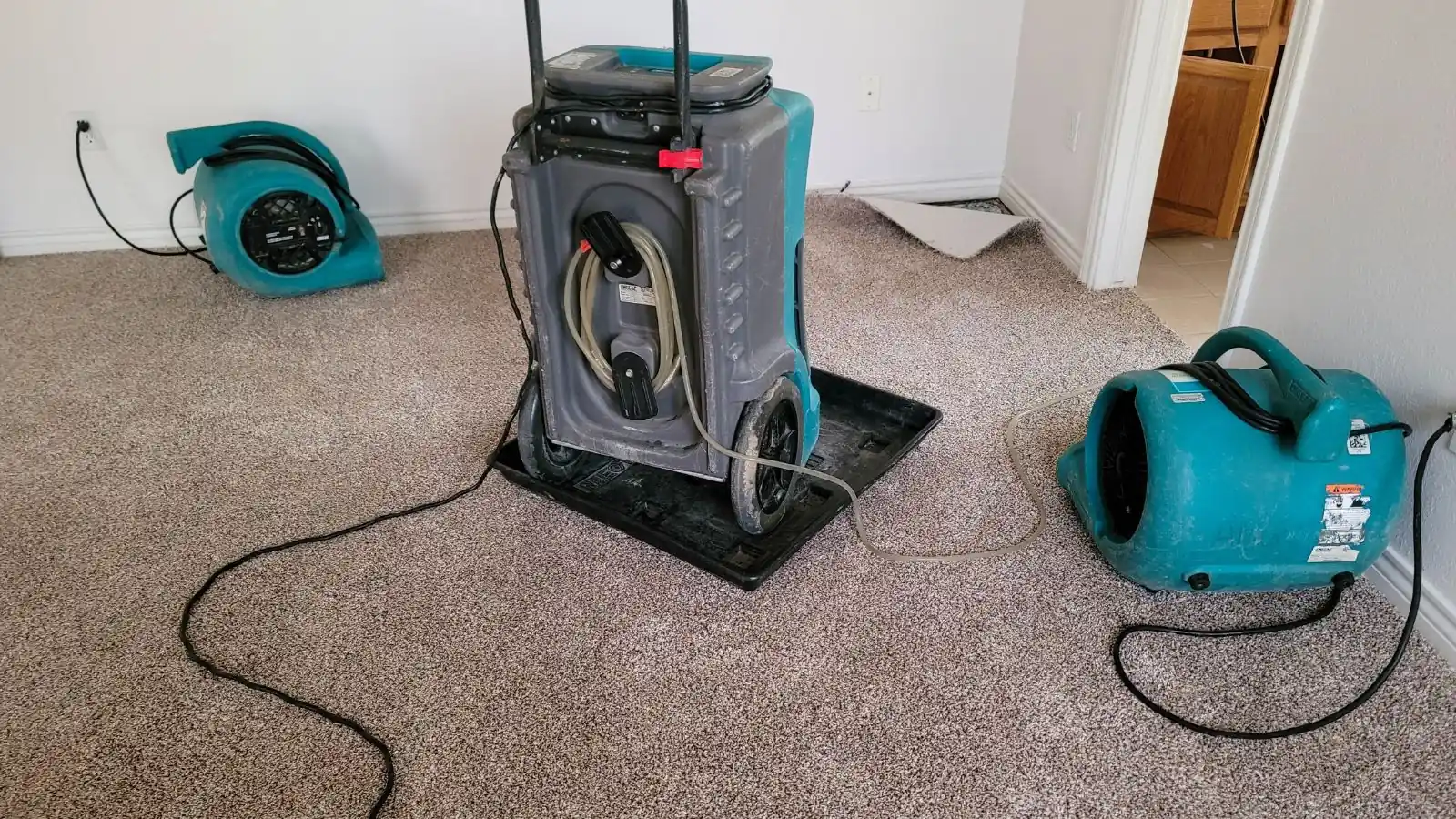
Equipment is typically charged by the day it runs. Many residential jobs reach the drying target in a few days, and dense materials such as hardwood, plaster and heavy framing take longer. Readings decide when drying ends, so a scope that lists equipment without a monitoring plan is incomplete.
The structural drying page explains what is measured and how a drying job ends.
Mitigation versus rebuild
A water loss has two parts. Mitigation is the emergency work: extraction, removal of unsalvageable material and drying. Rebuild is the repair of what was removed, such as drywall, paint, flooring and trim. They are often priced separately, and the rebuild can be larger than the mitigation.
Ask whether a scope includes both and whether the rebuild is itemized. The water extraction page covers the first hours.
Why two estimates can differ by a lot
Two honest estimates for the same loss can still differ because they assume different things. One company may assume the water was Category 1 and plan to dry the carpet, while another assumes Category 2 and plans to replace the pad. One may plan five days of equipment and another three. Neither is lying, and the difference is a question to ask, not a reason to pick the lower number.
Ask each company why it chose its category, how many days of drying it expects and what readings will end the job. The answers show whether the estimate comes from measurement or from habit.
Want the cost factors applied to your own loss? Call the line.
☎ Call (833) 521-1033How to compare scopes
Ask each company for the same things in writing: the water category it assumed, the area it measured, the materials it plans to remove, the equipment it plans to place and how it will confirm drying. A lower number that leaves out monitoring or rebuild is not a lower price.
Check any contractor's license at verify.tn.gov and be careful with large deposits. The Tennessee Department of Commerce and Insurance advises limiting deposits to no more than one-third of a home improvement contract price.
Insurance and price
Insurance is a separate question from price. Sudden and accidental water damage is often covered, gradual leaks often are not and flood damage usually needs its own policy. Check your policy or ask your insurer. Neighbors in Hermitage and Old Hickory face the same factors with different permit offices.
Local items that affect scope
Two local facts change what restoration involves. In Davidson County, Metro Nashville Codes requires a permit before drywall is installed after weather damage, while demolition and cleanup need none. In Wilson County, the City of Mt. Juliet runs its own permitting, so ask the city before assuming.
Cost also tracks what the water was. Contaminated water from outside or from a sewer line means more material is removed. Source type: municipal code office guidance and industry standard categories.
Common Questions
Why will no one give me a price over the phone?
Because water damage cost depends on facts that only show up on site, such as how far the water spread and what materials are wet. A phone call can explain the factors and the process, and a scope written after a measurement gives a number you can rely on.