
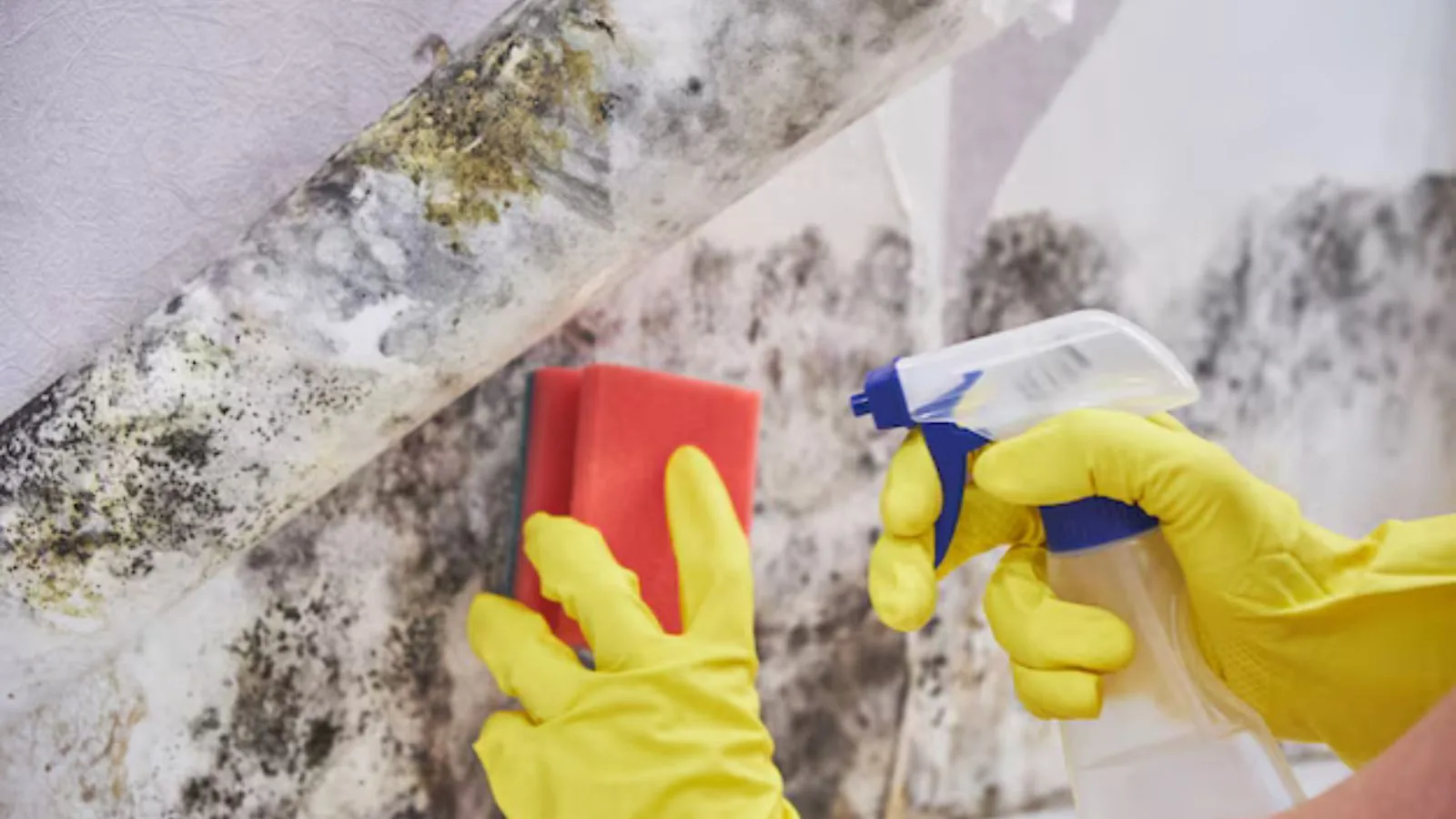
This is the do-it-yourself version, for a small area. The EPA says that if a moldy area is less than about 10 square feet, roughly a 3 foot by 3 foot patch, in most cases you can handle the job yourself. If yours is larger, keeps returning or followed sewage or floodwater, skip to the end and call a crew.
Cleanup does not fix the cause. Read the companion guide on getting rid of basement mold for moisture control, and fix the leak before you scrub.
Before you start
Decide whether the job is yours. Anyone with a health condition, anyone who is sensitive to dust or mold and anyone who is unsure should skip it and ask a physician. Keep children and pets out of the area.
Gather gloves, eye protection, a mask or respirator suited to dust and old clothes you can wash or discard. The EPA's guidance links to protective gear advice, and it is worth reading before you begin.
Step 1: stop the moisture
Fix the leak or run a dehumidifier. Cleaning a surface that is still wet is wasted effort. Open windows only if the outside air is drier than the inside, since humid air does not help.
Step 2: separate what to clean from what to throw away
The EPA says absorbent or porous materials, such as ceiling tiles and carpet, may have to be thrown away if they become moldy. Cardboard boxes, paper, upholstered items and wet carpet pad fall in this group. Bag them in plastic before carrying them through the house.
Hard surfaces such as concrete, tile, metal and sealed wood can usually be cleaned.
Clean or discard
A rough guide for a small mold patch.
| Material | Usual choice | Notes |
|---|---|---|
| Concrete and block | Clean | Scrub, rinse and dry completely |
| Tile and metal | Clean | Detergent and water |
| Sealed wood | Clean | Check for softness |
| Carpet and pad | Discard if moldy | Absorbent material |
| Cardboard and paper | Discard | Cannot be cleaned |
| Drywall with growth | Often cut out | Porous and hard to clean |
Step 3: scrub and dry
The EPA recommends scrubbing mold off hard surfaces with detergent and water and drying completely. Use a stiff brush, wipe with clean water and dry the surface with towels and air movement. Do not mix cleaning products, and do not paint over the area afterward until it is fully dry.
Why the order of the steps matters
The order is stop the water, remove what cannot be cleaned, clean what can and dry everything. Reversing it is where people go wrong. Scrubbing a wall that is still damp spreads spores onto clean surfaces and leaves the moisture. Hauling out wet cardboard before bagging it drags growth across the floor.
Work from the cleaner area toward the dirtier one, and keep tools for the moldy area separate from household tools. If you must bring a vacuum, use one with a HEPA filter, because an ordinary vacuum can blow fine particles back into the room.
Dealing with stored contents
Basements collect belongings, and decisions about them are the hardest part. Hard items such as plastic bins, glass and metal can be wiped, dried and returned. Books, photographs, fabric and paper that grew mold are difficult to save, and a conservator is the right person to ask about anything irreplaceable.
Before you throw out anything of value, photograph it and write a short list. That record helps with insurance and keeps you from second-guessing yourself later.
A note on respirators and ventilation
Pick protective gear before you start and check that it fits. A loose mask does little. Ventilate the room with a window fan that blows out, not in, and keep the door to the rest of the house closed so dust stays in the work area.
If breathing becomes difficult or you feel unwell at any point, stop, leave the area and talk to a physician.
Bigger than a patch? Call the line and describe the area.
☎ Call (833) 521-1033Step 4: bag, clean up and check
Seal bags before moving them, wash your clothes separately and wipe tools. Run the dehumidifier and check the area in a few days. If the growth returns, the moisture is not fixed.
Signs you should stop
Stop and call a crew if the area is bigger than expected, if the drywall is soft, if you find mold inside the wall when you open it, if sewage or floodwater was involved or if the smell persists after cleaning. The mold remediation page describes what professional work involves, and the sewage backup page explains why contaminated water changes the rules.
Nearby areas
The same steps apply in Hermitage and Old Hickory. For larger jobs, ask whether your state or locality licenses mold work and check the contractor's credentials.
Hiring help in Tennessee
If the job is bigger than a small patch, check any contractor's license at verify.tn.gov, the State of Tennessee's verification site. The Tennessee Department of Commerce and Insurance advises limiting deposits on home improvement work to no more than one-third of the contract price.
For flood-related concerns, the City of Mt. Juliet Utility Department hosts a FEMA flood zone web application and floodplain information. Source type: state regulator consumer guidance and municipal utility pages.
Common Questions
Can I use bleach to clean mold on a basement wall?
The EPA's cleanup guidance recommends scrubbing mold off hard surfaces with detergent and water and drying completely. Do not mix cleaning products, and ventilate if you use any chemical. Porous materials usually cannot be cleaned and may have to be thrown away.