
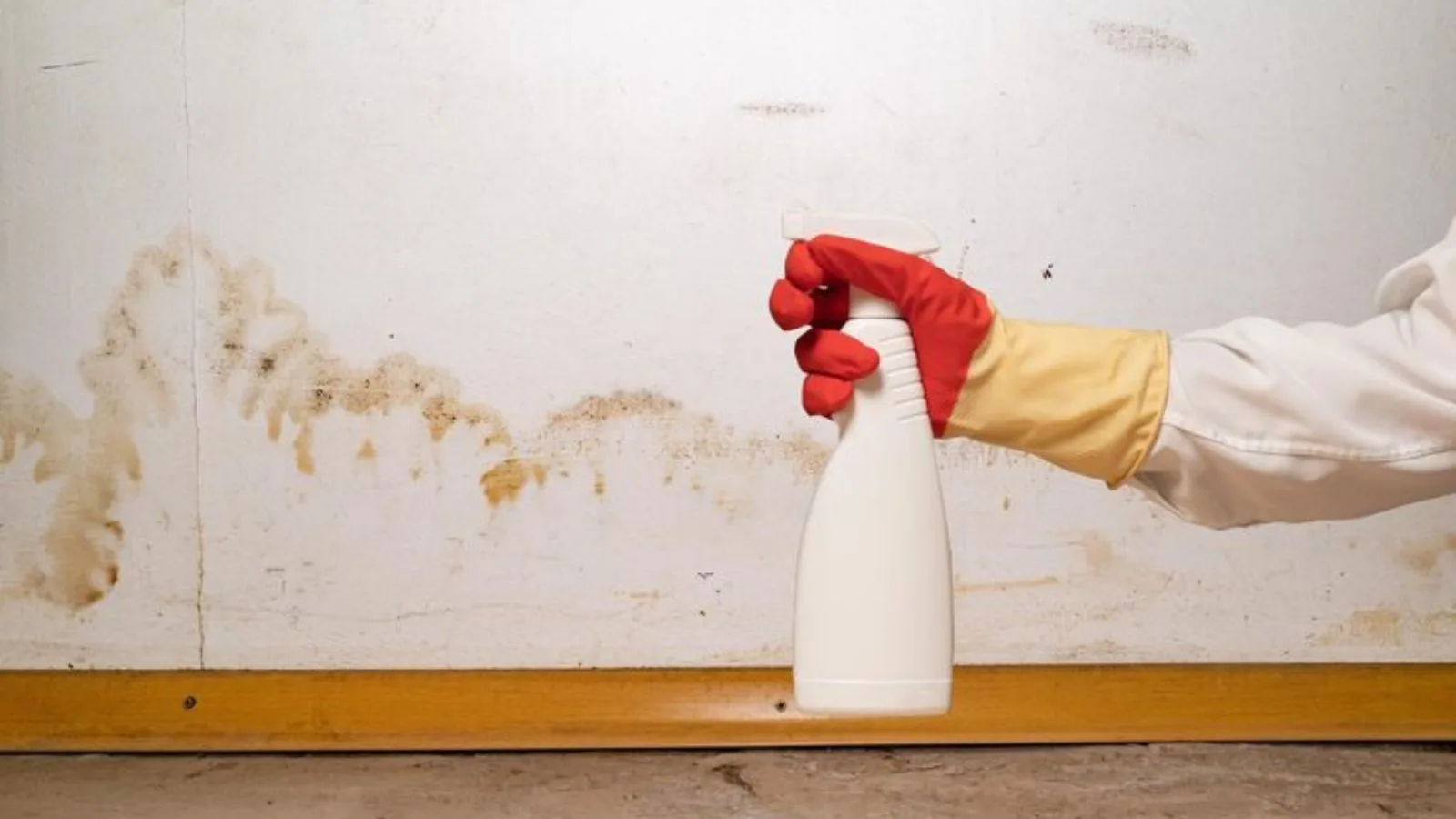
Most advice on mold in a basement is about killing it. The part that decides whether it comes back is moisture. A basement that is cleaned and left damp will grow mold again, sometimes within weeks. This guide is about the ongoing work of keeping the space too dry for mold to stay.
Cleaning a small patch is covered in a separate how-to on cleanup. This page is about prevention, control and the signs that a problem is bigger than a patch.
Step 1: find where the water comes from
Walk the basement after a rain with a flashlight. Look at the wall-floor joint, window wells, pipe penetrations and any spot where a stain or a rust ring shows. Check the plumbing, the water heater, the washer and the sump pit if you have one. Outside, look at gutters, downspouts and the slope of the ground against the house.
If water appears only after rain, the cause is outside. If it appears at any time, the cause is probably plumbing, an appliance or condensation.
Step 2: lower the humidity
The EPA suggests keeping indoor humidity below 60 percent, ideally between 30 and 50 percent. A hygrometer costs little and shows the number. A dehumidifier sized for the space, with a drain line so it does not fill and stop, is the usual tool. Keep it running through humid months and check the reading weekly.
Habits that keep a basement dry
Small, regular tasks beat one big cleanup.
| Habit | How often | What it prevents |
|---|---|---|
| Check the humidity reading | Weekly | Damp air that feeds growth |
| Clear gutters and extend downspouts | Seasonally | Water against the foundation |
| Inspect plumbing and appliance hoses | Twice a year | Slow leaks |
| Keep stored items off the floor | Once, then maintain | Mold on cardboard and fabric |
| Test the sump pump if you have one | Before wet seasons | Failure when it matters |
Step 3: remove what cannot be cleaned
The EPA notes that absorbent materials such as carpet and ceiling tiles may have to be thrown away if they become moldy. Cardboard, books, upholstered furniture and carpet that stayed damp usually fall into that group. Hard surfaces can be scrubbed with detergent and water and dried completely.
Step 4: dry what you cleaned
Cleaning is not finished until the surface is dry. Run a dehumidifier and air movement until the materials feel dry and the humidity reading stays in range. Check again after a few days, and again after the next rain.
Common mistakes that bring mold back
Running a dehumidifier without a drain, so the tank fills and the unit stops, is the most common mistake. Storing boxes against exterior walls, where air cannot move and the surface stays cool, is the next. Finishing a wall over damp concrete without checking moisture first is a costly one, because the mold then grows out of sight behind new drywall.
A hose that is left connected to an outdoor spigot, a washer that drains slowly and a water heater with a weeping fitting are small leaks that feed mold for months. A quick look every few weeks catches them.
A simple monitoring routine
Pick one place in the basement, away from the dehumidifier, and put a hygrometer there. Write down the reading once a week and after every heavy rain. A reading that climbs above 60 percent for several days is the signal to look for a new source. Note the date of any stain you see and the date you cleaned it, so you can tell whether it returns.
This record is also useful if you ever need to show an insurer, a buyer or a lender that the space has been kept dry.
Basement keeps coming back damp? Call the line and describe it.
☎ Call (833) 521-1033When it is more than a patch
Mold across a large area, mold that returns after cleaning, mold behind finished walls and any mold that followed sewage or floodwater are jobs for a crew. Professional remediation follows ANSI/IICRC S520, the industry standard for mold remediation, and uses containment and air filtration.
The mold remediation page explains the steps, and the crawl space page is useful if the moisture is coming from under the house instead.
Moisture inside walls
Moisture behind finished walls is the hardest to see. A moisture meter or thermal camera can find it without opening the wall. If a wall reads wet after you have fixed the source, it needs drying, and the wall and drywall page explains how that is decided.
Nearby areas
Homeowners in Hermitage and Old Hickory face similar basement moisture questions, with Metro Water Services handling stormwater in Davidson County.
Drainage is a city and lot matter
The City of Mt. Juliet created a stormwater utility in November 2022 to address long-standing flooding, and the stormwater charge has appeared on the monthly sewer bill since April 2023. In July 2026, NewsChannel 5 reported that a concrete blockage in a culvert in Belinda City was preventing repair, and the city described the utility as its tool for drainage fixes.
Drainage on public property is the city's concern, and drainage on your lot is yours. A basement that takes water after every storm needs both looked at. Source type: municipal utility information and local news.
Common Questions
My basement was cleaned and the mold came back. Why?
The moisture was probably not fixed. Mold returns where humidity stays high or water keeps entering. Find the source, lower the humidity and dry the surfaces completely, then monitor the reading for a few weeks.