
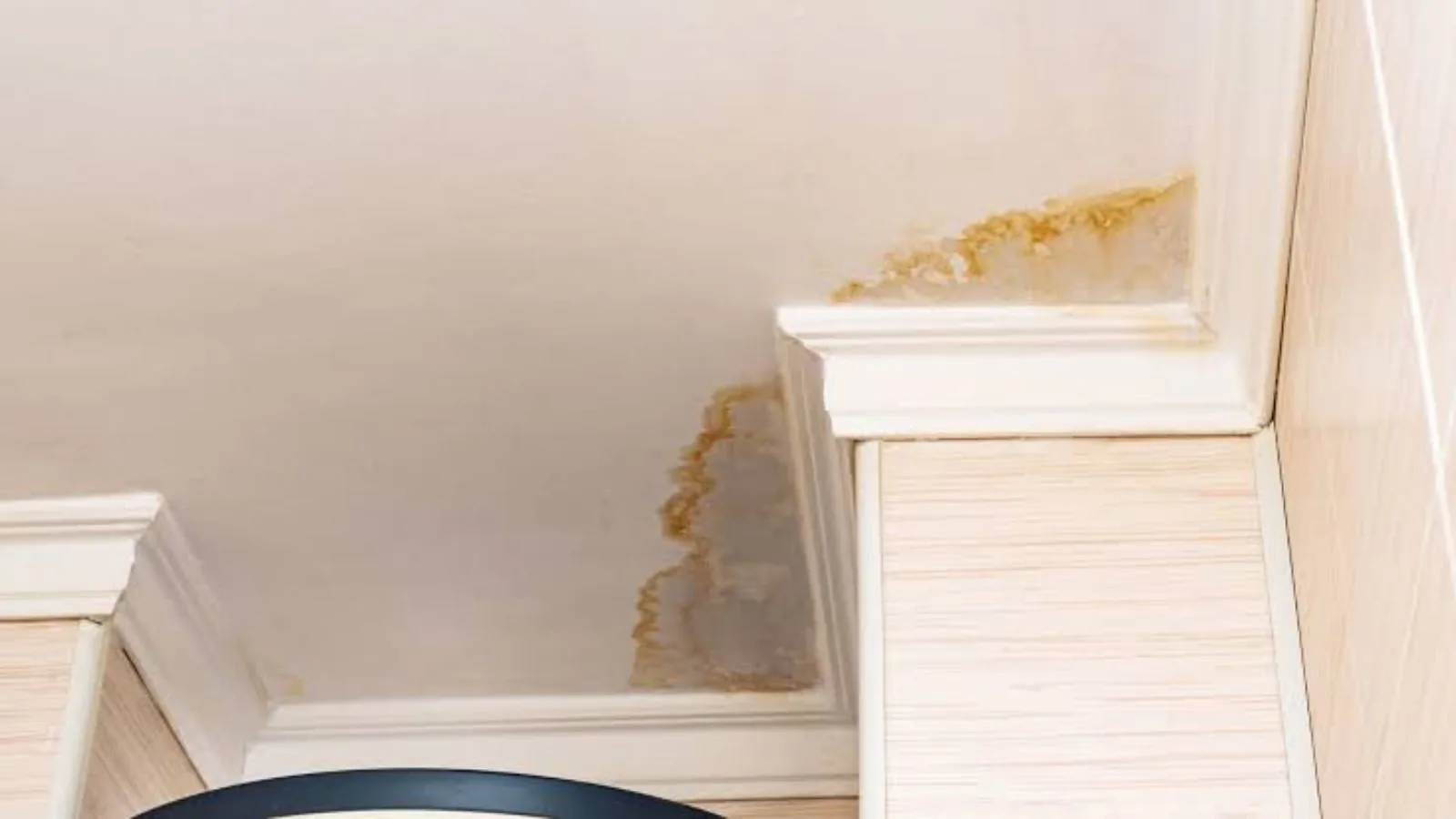
Whether damage is old or new matters for repairs, for insurance and for a sale. It tells you if the source is still active or the event is over. That is the difference between fixing a leak and only repairing a stain. It is also the hardest question to answer by looking, and this guide is honest about that.
The strongest evidence combines what you see with a measurement. A stain can look ancient and still be wet, and a fresh-looking mark can be dry. Use the clues below, then check with a moisture meter.
Clues that suggest a recent loss
Fresh water damage tends to look damp and darker. Paint may be bubbling or peeling, and drywall can feel soft. The edges of a new stain are usually blurry and spreading. A recent loss often has a clean, wet smell more than a musty one, and metal fasteners may not yet show rust.
Clues that suggest an older loss
Old damage often leaves a ring with a dark outer edge where water dried and left minerals behind. Rings inside rings suggest repeated wetting. Stains may be brown or yellow, the surface may be stiff and crusty and fasteners may be rusted. A stale, musty smell points to moisture that has been present for a while.
None of these is proof. A single event can leave a ring, and a long drip can leave a soft stain.
Clues side by side
These are guides, not verdicts.
| Clue | Often recent | Often older |
|---|---|---|
| Feel | Damp or soft | Dry, stiff or crusty |
| Edges | Blurry and spreading | Sharp rings, sometimes multiple |
| Color | Darker wet patch | Brown or yellow stain |
| Smell | Wet or clean | Musty |
| Fasteners | Bright metal | Rust |
Why a moisture meter beats a guess
A moisture meter reads the water content of drywall, wood and other materials, and a thermal camera shows cool, wet areas behind surfaces. A stain that reads dry against an unaffected reference is not active, even if it looks fresh. One that reads wet is still taking water, whatever its age.
Readings answer the question that matters most for repair: is the source still there? If yes, finding it comes first.
Painted-over stains
A stain that has been painted may reappear, which is one of the clearest signs of moisture that is still moving. Paint also hides rings and texture, so a repaired spot can look new while the cause is still there. Look for ripples in the paint, a slightly different sheen or a patch that does not match the rest of the wall.
If you are buying, ask when the area was last painted and why. A seller who knows the history can say whether it was a one-time event.
Questions to ask before you decide
Ask what the source was and whether it has been fixed. Ask whether a plumber or roofer wrote a report. Ask whether the repair was done to code and permitted where required. Ask whether moisture readings were taken after the repair.
If the answers are vague, an independent check with a moisture meter before you close is worth the cost. It turns a guess about the age of a stain into data.
Want readings to see if a stain is active? Call the line.
☎ Call (833) 521-1033Why the answer matters for insurance
Insurers often treat sudden damage differently from long-term seepage, so the age of a stain can affect a claim. Do not guess in a claim, and do not describe a stain as newer or older than you know. Record when you first saw it, photograph it and let measurements and the failed part show the story.
Keep any inspection, plumber's report or moisture reading. The kitchen water damage page and the ceiling water damage page describe common places where old stains turn out to be active.
If you are buying a house
Stains that have been painted over are common. Ask for disclosure of past leaks, bring a moisture meter or a professional to the inspection and ask about repairs and permits. A home inspector can flag what to look at.
Nearby places
The same clues apply in Hermitage and Old Hickory, including older homes in the historic village of Old Hickory, where original plaster and pine can show stains differently than modern drywall.
Older homes and public descriptions
Neighborhoods in Mount Juliet span many building eras. Public descriptions of Belinda City list homes built between 1974 and 2007, while newer communities such as Del Webb Lake Providence list homes built from 2007 to 2015. Older homes have had more years for slow leaks to leave marks.
Age alone does not tell you whether a stain is active. The same house can have an old, dry ring and a new, wet one in different rooms. Source type: public neighborhood descriptions and general building knowledge.
Common Questions
The stain on my ceiling has not changed in months. Is it safe to ignore?
It may be old and dry, or it may be an intermittent leak that only shows after rain or use. A moisture reading on a dry day and again after rain or after the suspected fixture is used can tell you. If it reads wet, find the source.