
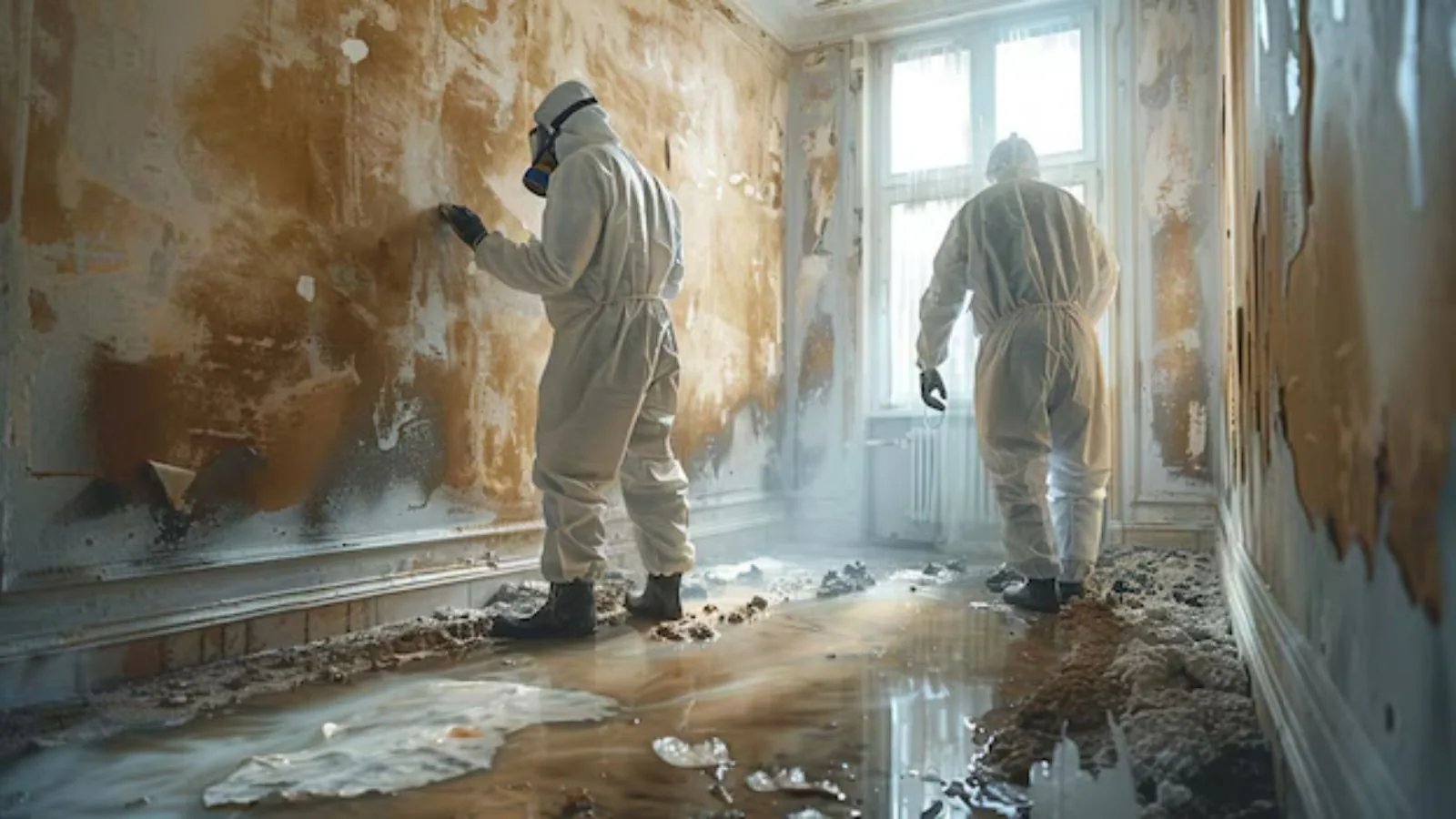
A buyer, a lender or an insurer may ask for proof that mold was addressed. The usual proof is a clearance test, a sample taken after remediation to show whether the area has returned to a normal condition. This guide explains what that means and what it does not.
There is no federal standard for mold. The EPA says no federal limits have been set for mold or mold spores, so a test report does not certify compliance with a federal number. It describes conditions in the sample, and the person who asked for it decides whether it is enough.
What clearance means
Clearance is the final check after remediation. A tester collects samples from the work area and, for comparison, from outside or an unaffected room. The lab report compares them. The EPA notes that surface sampling may be useful to determine if an area has been adequately cleaned or remediated.
Many people also ask for a visual inspection that confirms the moisture source is fixed and the area is dry. The paperwork that follows is what a buyer or lender will read.
Who orders it and who does it
A lender, buyer or insurer usually decides whether it wants clearance and what form it should take. Ask them first. An independent tester who does not do the remediation gives the most objective result, because the company that cleaned the area is not the one grading the cleaning.
A sale or loan document checklist
Collect these before the question comes up.
| Document | What it shows | Who asks |
|---|---|---|
| Cause and repair record | The moisture source was fixed | Buyer, lender |
| Remediation scope and photos | What was removed and cleaned | Buyer, insurer |
| Drying logs and readings | The structure reached the target | Insurer |
| Clearance test report | Post-remediation condition | Lender, buyer |
| Permits for repair work | Repairs were done to code | Buyer, lender |
What a report does not show
A clearance report is a snapshot. It does not predict the future, and it does not say anything about health. If anyone has questions about health, ask a physician. A report is only as good as the cause fix behind it, so an area that is cleared but still takes water will not stay cleared.
What a buyer or lender typically wants to see
The paperwork asked for tends to fall into three groups. The first is proof the cause was fixed, such as a plumber's invoice or a repair record. The second is proof of work, such as a scope, photographs and invoices from the remediation company. The third is proof of condition afterward, such as a clearance report or a dry reading log.
If only one document is available, ask the person who requested it whether it satisfies them before you spend more. Written confirmation from the lender or buyer is worth far more than an assumption.
Questions to ask a tester
Ask what samples will be taken and where, what the lab will report and how the results are compared. Ask whether the tester is independent of the remediation company and whether they carry any credential your lender or state requires. Check any license at verify.tn.gov where one applies.
Ask for a sample report before you hire anyone, so you know what you will be handing over.
Costs and sequencing
Clearance testing adds a cost and a wait. Collecting samples takes a visit, and lab results usually take days. Plan the order of work so that testing comes after drying and cleaning and before any finish repair that would cover the area, because a sealed wall cannot be sampled behind the paint.
If a closing date is fixed, tell the remediation company and the tester at the start. They can set a schedule that fits, and a clear timeline avoids last-minute panic. Ask the lender how recent the report must be, since some ask for a test within a set number of days before closing.
Need mold addressed before a sale or loan? Call the line.
☎ Call (833) 521-1033Disclosure and honesty
Sellers have disclosure duties that vary by situation, and this page cannot say what applies to you. Ask your real estate agent or an attorney. Keep records, and be accurate about what was found and what was done.
The mold remediation page describes how remediation is carried out under ANSI/IICRC S520, the industry standard.
Timing
Ask early. Remediation, drying, repair and testing take time, and lab results add days. Do not schedule a closing and then discover the clearance step. The structural drying page explains why drying readings come first.
Nearby places
Sellers in Hermitage and Old Hickory face the same paperwork, with Metro Nashville Codes handling permits in Davidson County.
Permits and records
If drywall was replaced during mold work, the permit office depends on the address. Metro Nashville Codes requires a permit before drywall is installed after weather damage in Davidson County, and an owner-occupant or licensed contractor can pull it. For addresses in Mount Juliet, ask the city's codes office what applies.
Keep the permit with the remediation scope and any test report. Source type: municipal codes office guidance and general document practice.
Common Questions
Is a clearance test required to sell a house with past mold?
That depends on your buyer, lender and the contract, and this page cannot say. Ask them what they require, keep the remediation records and ask your agent about disclosure duties.